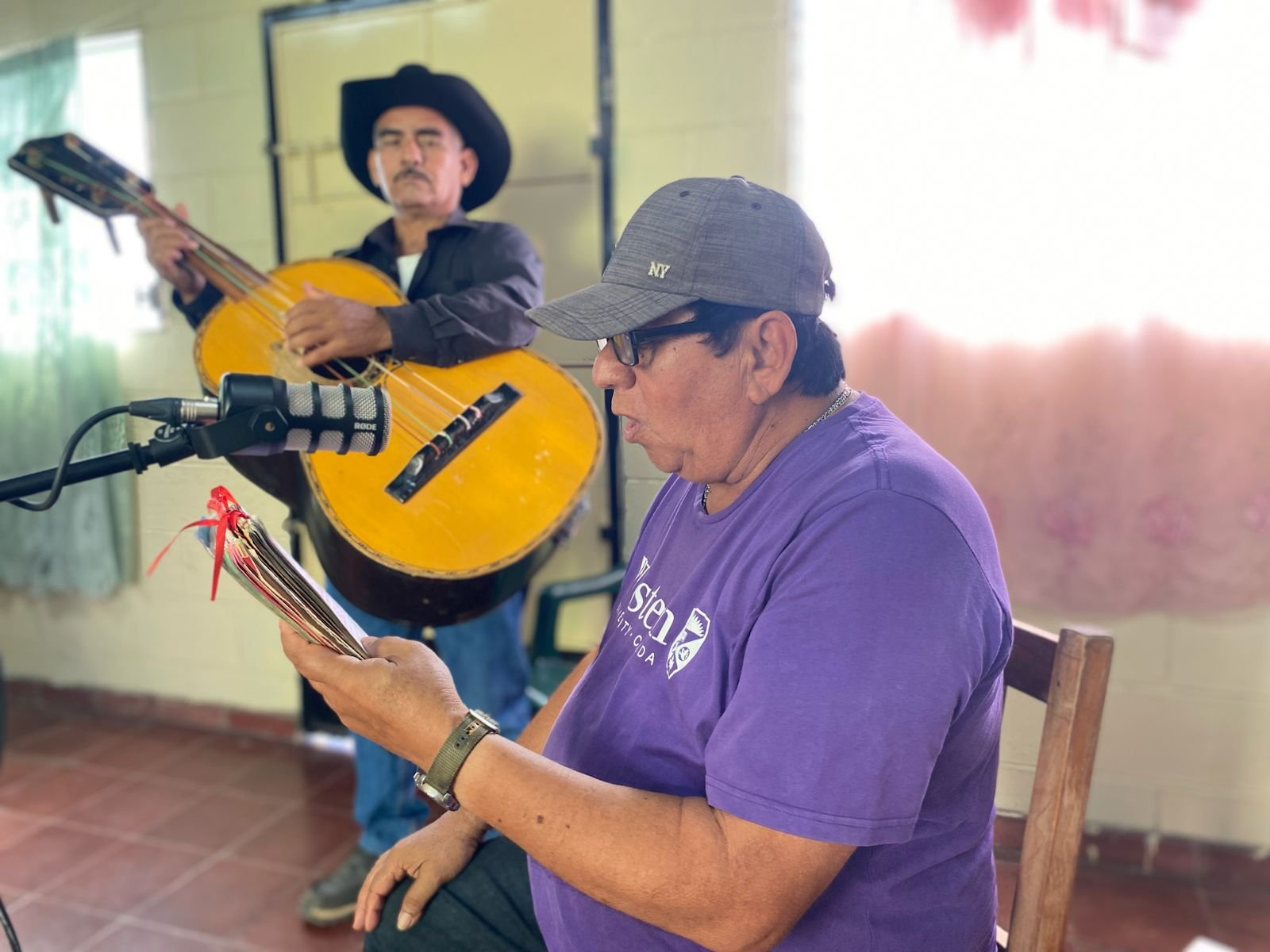
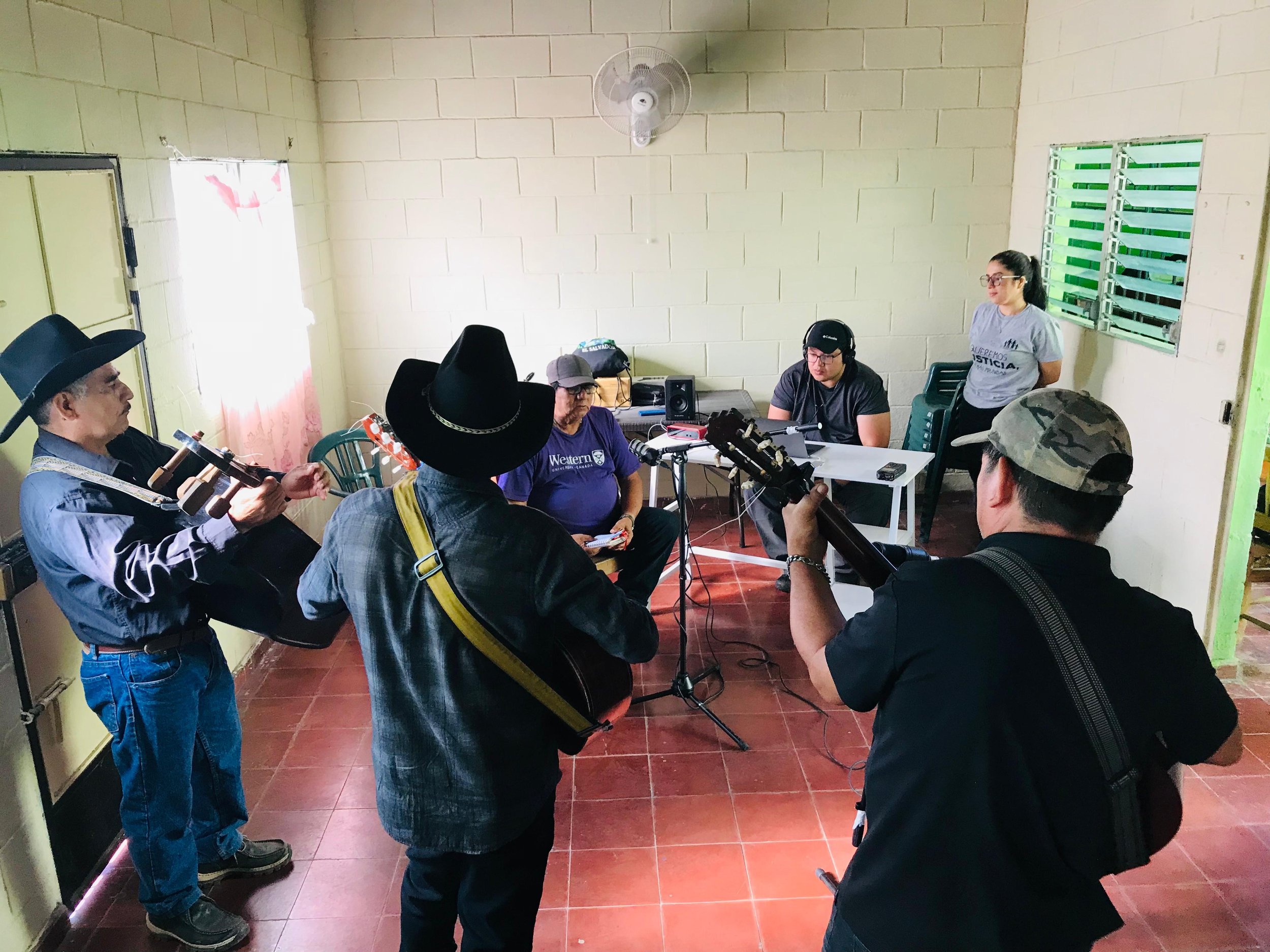
“The Lasting Legacy of the Salvadoran Civil War on Environment and Health,” an essay by Amaan Thawer
Surviving Memory research assistant Amaan Thawer has published the essay “The Lasting Legacy of the Salvadoran Civil War on Environment and Health” on the Planetary Health Alliance website this November 2025.
In the piece, Thawer examines El Salvador’s ongoing environmental crisis and its deep connections to the country’s Civil War (1979–1992). He analyzes the current state of pollution, deforestation, and intensive agrochemical use, arguing that these problems cannot be understood in isolation from the violence and displacement of the war. “Much like other social and ecological vulnerabilities, El Salvador’s current environmental fragility is deeply rooted in the trauma and destruction of its civil war,” he writes.
The essay also highlights the work of the Centro Salvadoreño de Tecnología Apropiada [Salvadoran Center for Appropriate Technology,CESTA], which denounces environmental harm caused by industries and governments while promoting practical alternatives such as cycling, composting organic waste, recycling, and forest protection. Thawer draws on insights from CESTA director Dr. Ricardo Navarro, who has long documented war-related environmental damage. “Among the most destructive tactics employed during the war was the scorched-earth strategy – an ecocidal approach involving widespread aerial bombardments using napalm and white phosphorus to incinerate forests and campesino farmlands,” Thawer notes. “Ecological destruction wasn’t incidental; it was instrumentalized to break communities’ capacity to survive.”
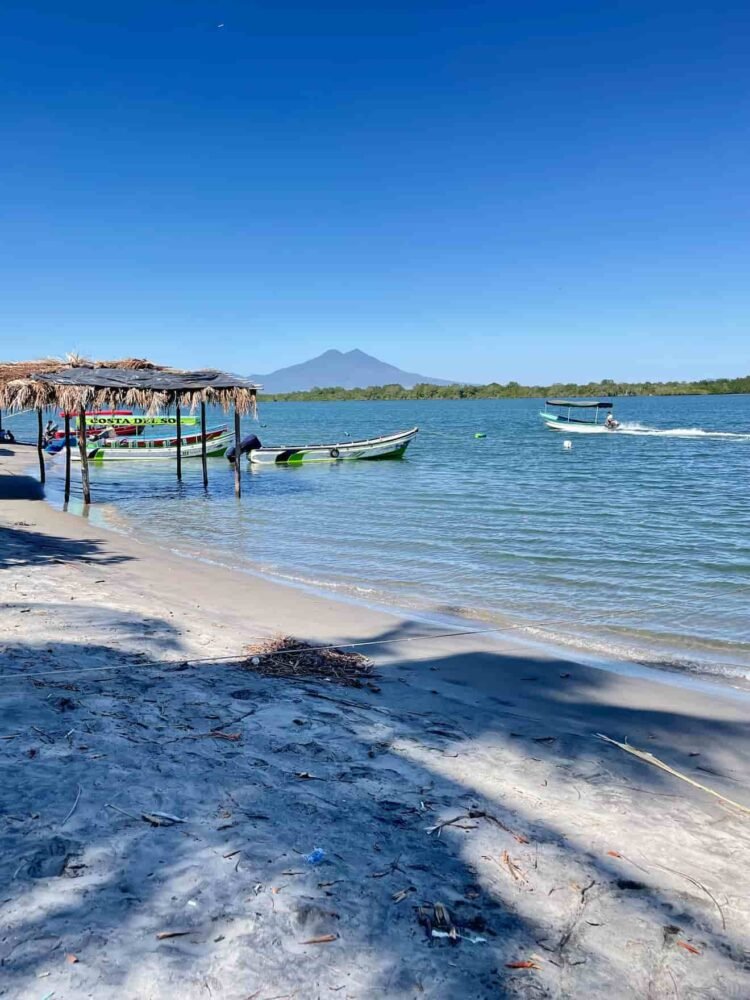
Photo by Amaan Thawer during his time on Tasajera Island, El Salvador.
“Con un gran amor”: Photos, Stories, and Reflections from Postwar El Salvador — CRS/CERLAC seminar at York University, November 12
Members of the Surviving Memory team will present “‘Con un gran amor’: Photos, Stories, and Reflections from Postwar El Salvador” in a hybrid seminar at York University on Wednesday, November 12, 2025. Speakers include Adriana Alas, Giada Ferrucci, and Amanda Grzyb (Western University); Morgan Poteet (Mount Allison University); and Jocelyn Torres (York University). The event is organized by the Centre for Refugee Studies (CRS) and the Centre for Research on Latin America and the Caribbean (CERLAC). Join in person or via Zoom.
Abstract
This seminar explores the use of Photovoice as a creative participatory research and community engagement method within the Surviving Memory in Postwar El Salvador project. Photovoice is an accessible and flexible method that allows participants to document issues, identify strengths, and direct action within their communities. We engaged with survivors and community collaborators using Photovoice to explore memory, identity, and resilience in postwar El Salvador. This presentation will show and reflect on Photovoice projects from three different communities in El Salvador that highlighted themes of mental health, community and gendered memory, urbanization, and the natural environment variously within each context and the wider historical context of El Salvador.
Event details
When: Wednesday, November 12, 2025, 11:00 a.m.–12:30 p.m. (Toronto).
Where: In person – Room 280N, York Lanes, Keele Campus, York University; Zoom (registration required): https://yorku.zoom.us/meeting/register/H2uotL1VRxiLZGGTjE_qBQju

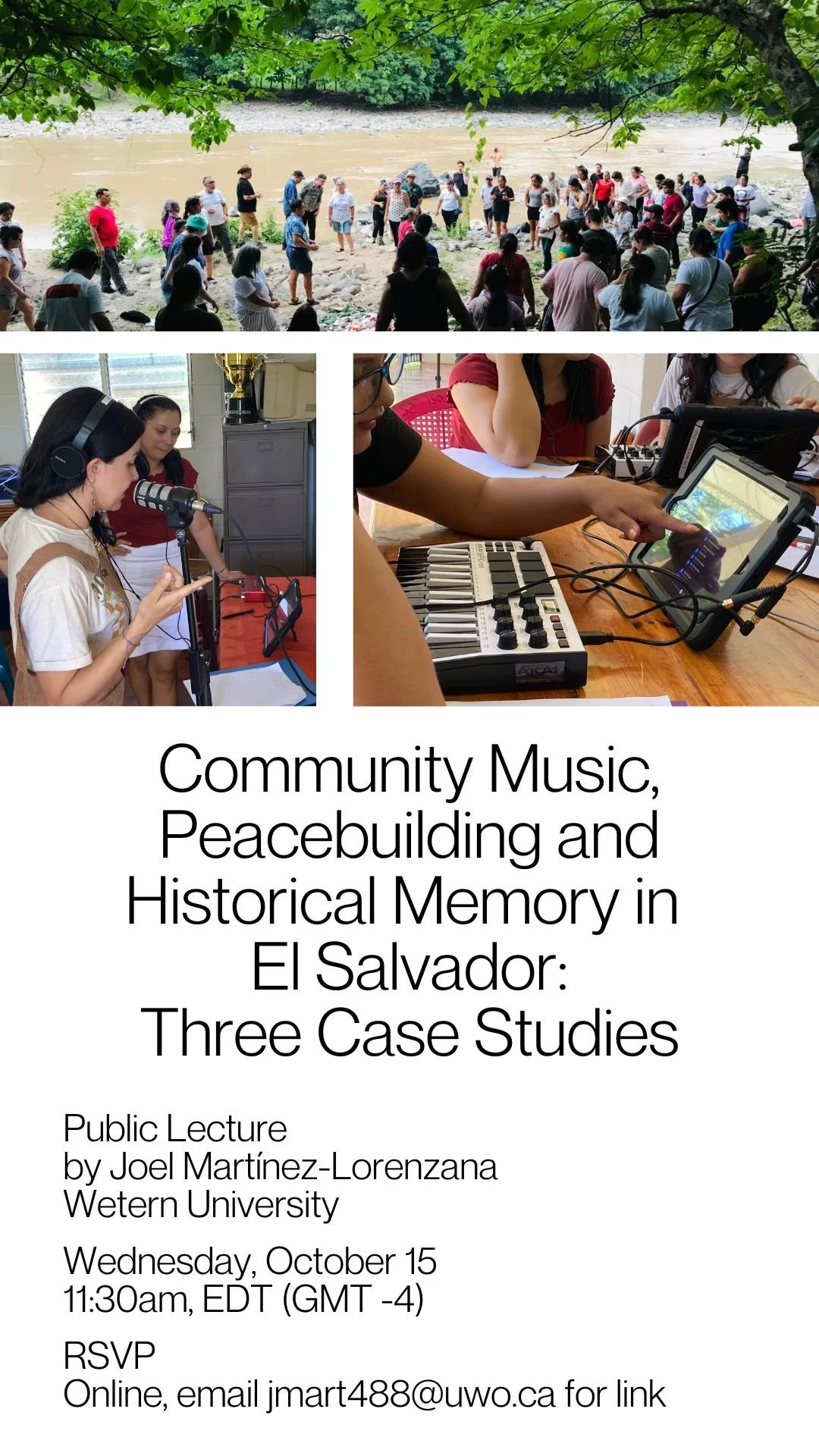
Join Joel Martínez-Lorenzana’s PhD online public lecture about Salvadoran community music on October 15
Innovative approaches to Salvadoran community music are the topic of Joel Martínez-Lorenzana’s PhD public lecture on Wednesday, October 15, 2025. He will give the presentation, “Community Music, Peacebuilding, and Historical Memory in El Salvador: Three Case Studies,” online, starting at 11:30 a.m. EDT (UTC−4).
RSVP to jmart488@uwo.ca for the videoconference link.
About Joel
Joel Martínez-Lorenzana worked for ten years as a faculty member in the Art Department at the National Autonomous University of Honduras and coordinated its Bachelor of Music program from 2016 to 2019. In May 2021, Martínez completed a master’s degree in Piano Performance and Pedagogy at Arizona State University, U.S. In the fall of the same year, he began a PhD in Music Education at Western University, Canada. His research explores innovative approaches to music teaching and learning, imagining ways to transform, transgress, and delink music from practices that oppress and render diverse groups invisible.
New Postdoc Dr. María Laura Flores Barba joins the Surviving Memory Team
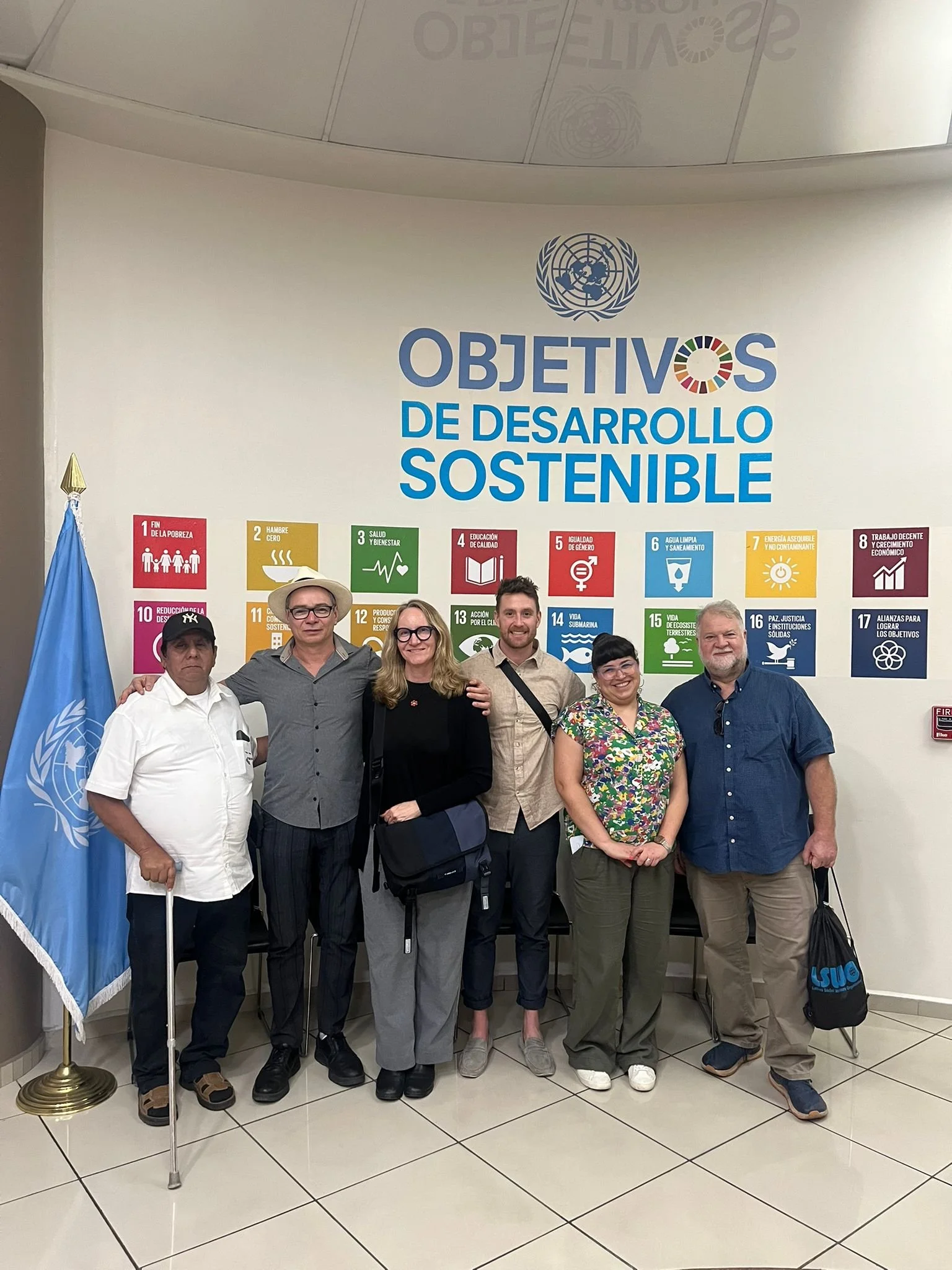
“Serendipity.” That’s how Mexican art historian Dr. María Laura Flores Barba describes first hearing about Surviving Memory. In September 2017, while teaching a beginner Spanish class, project founder Amanda Grzyb audited a few sessions. They stayed in touch. Dr. Flores Barba became a research assistant, joined fieldwork, and began rethinking how her work connects past and present—treating people in historical records as members of real communities.
In El Salvador, she spoke with survivors and families about what they lived through. The experience highlighted how local networks help people process the past and organize for the future. “I started talking to people, understanding what happened to them. And I loved doing fieldwork,” she says. “As a Latin American, I knew about Central American conflicts in general, but I learned about the Salvadoran Civil War directly from those who experienced it.”
Back in Canada, she revisited her PhD on colonial Mexican painters with a focus on relationships and networks, not only artworks and dates. That shift led to a digital database mapping 17th–18th century Mexican painters through their social ties, so they appear as people, not just subjects of study. You can explore the research outline and interactive map here.
With her PhD completed in June 2025, Dr. Flores Barba is beginning a two-year Western Postdoctoral Fellow with Surviving Memory. She is working on three connected projects:
1) Community-sourced photo archive
She is coordinating crowdsourced metadata for a digital archive of photographs of the Loreto Sisters, a Toronto-based group of nuns that supported community rebuilding in El Salvador. The archive will let Salvadorans identify people and places and add context and stories.
2) Copapayo Village history book
She is supporting local community leader and historian Otilio Ayala on a book about the history of Copapayo, a village destroyed during the war and the site of a massacre, with an emphasis on accessible documentation that centers community accounts.
3) Virtual reconstruction
Working with the map librarian at Western University Libraries, she is helping turn Copapayo’s community memory into structured data—where houses stood, how streets were organized, and what daily life looked like before the war. Community workshops will present and discuss previews to help ensure a faithful virtual reconstruction of the village.
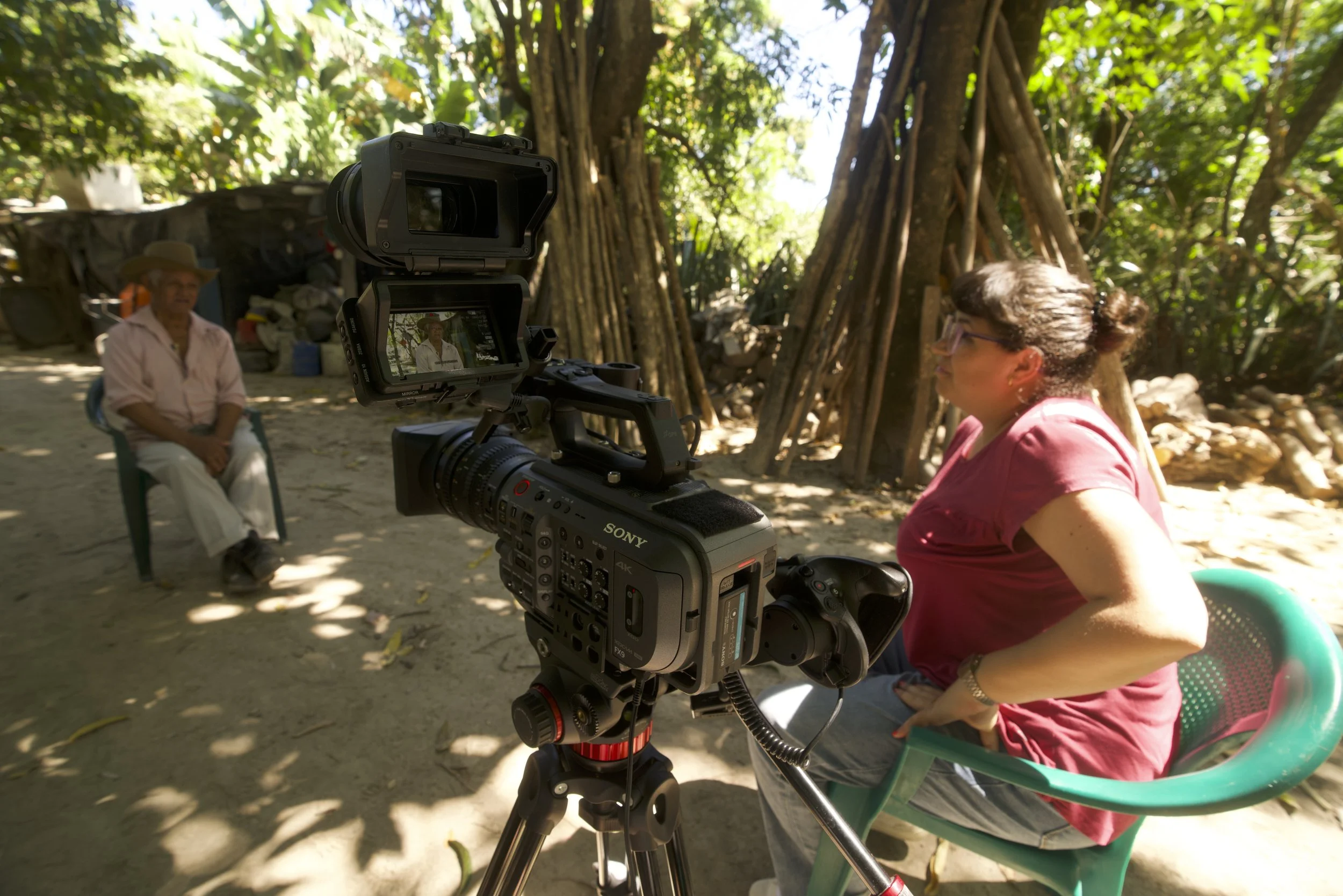
Among learning from different experiences, hearing tough stories of the past and finding creative ways to represent them and bring them to the present, Dr. Flores Barba is most excited to keep creating connections and working with the team. “As a historian, I used to work individually. We just go to an archive and write our things, and we don't really share much,” she remembers. “Now, I have discussions with the team, we think together and try to solve a problem together. It is teamwork and collaborative work to the fullest. And I love it. I like people and I like connecting.”
Threads that Unite Us: Collective Art Gathering with Salvadoran Artist Teresa Cruz at Western
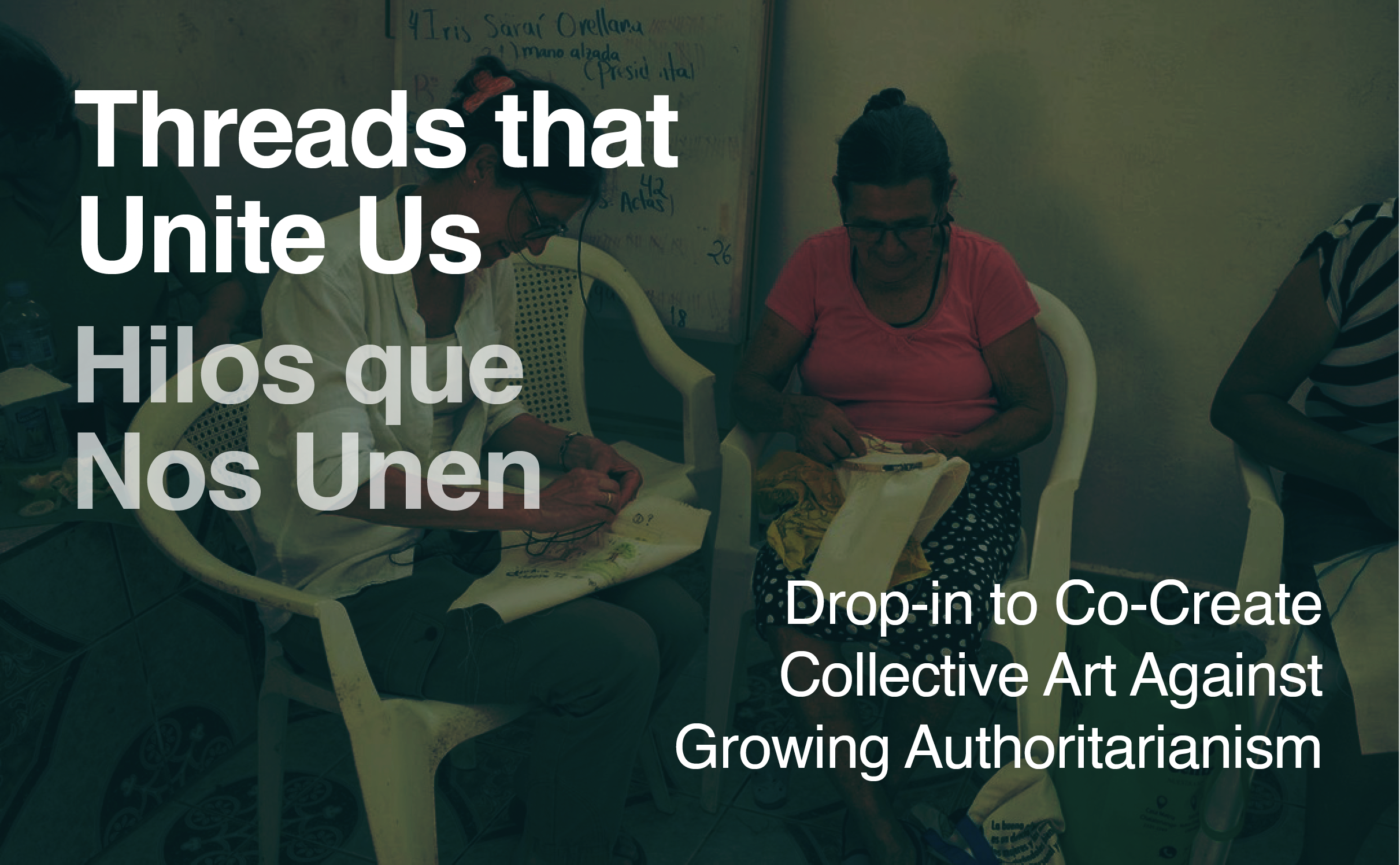
Western University will host Salvadoran embroiderer and visiting artist Teresa Cruz for a drop-in collective art gathering on October 2 and 3. The atrium of the FIMS and Nursing Building (FNB) will transform into a studio where participants will help create a large tapestry of resistance.
Participants are invited to stitch a small piece of the tapestry. Through the slow, mindful act of embroidery, craft becomes both solidarity and defiance – against fascism, white supremacy, authoritarianism, escalating attacks on trans lives and 2SLGBTQIA+ communities, and the persistence of misogyny. Each stitch is personal and communal – an image, word, or symbol of resistance – woven into a larger fabric that unites shared struggles.
Students, faculty, and staff are welcome to create art that both resists and heals, regardless of embroidery experience.
This is a drop-in collaborative event: arrive at any time, begin a new piece, or continue one left by another participant. Accompanying artists Soheila K. Esfahani, Tricia Johnson, and Kayla MacInnes will also join the gathering.
Event Details
What: Threads that Unite Us — Collective Art Drop-In Gathering
When: Thursday, October 2 (10:00 a.m.–4:00 p.m.) & Friday, October 3 (9:00 a.m.–12:00 p.m.)
Where: FIMS and Nursing Building (FNB), Western University
The event is co-sponsored by the Faculty of Information and Media Studies, the Rogers Chair of Studies in Journalism and New Information Technology, the Department of Anthropology, the Department of Visual Arts, the Department of Languages and Cultures, the Department of Gender, Sexuality, and Women’s Studies, the Surviving Memory in Postwar El Salvador project, the Liberia CRSV project, and Museo de la Palabra y la Imagen. It is supported in part by the Social Sciences and Humanities Research Council of Canada (SSHRC).
Participatory Strategic Planning Workshops with the Santa Marta Community
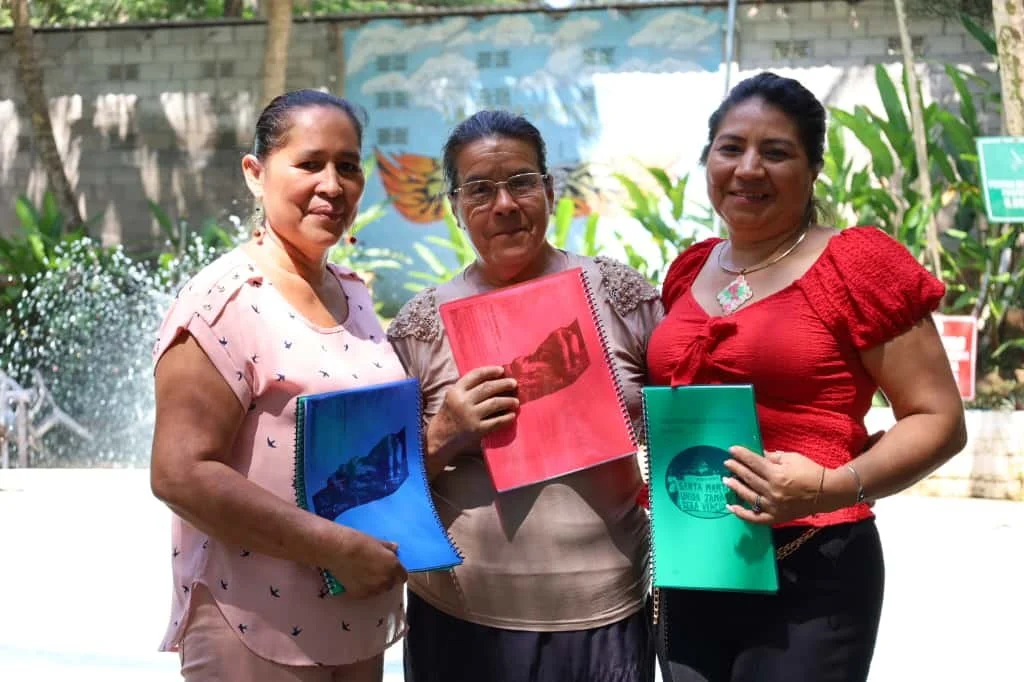
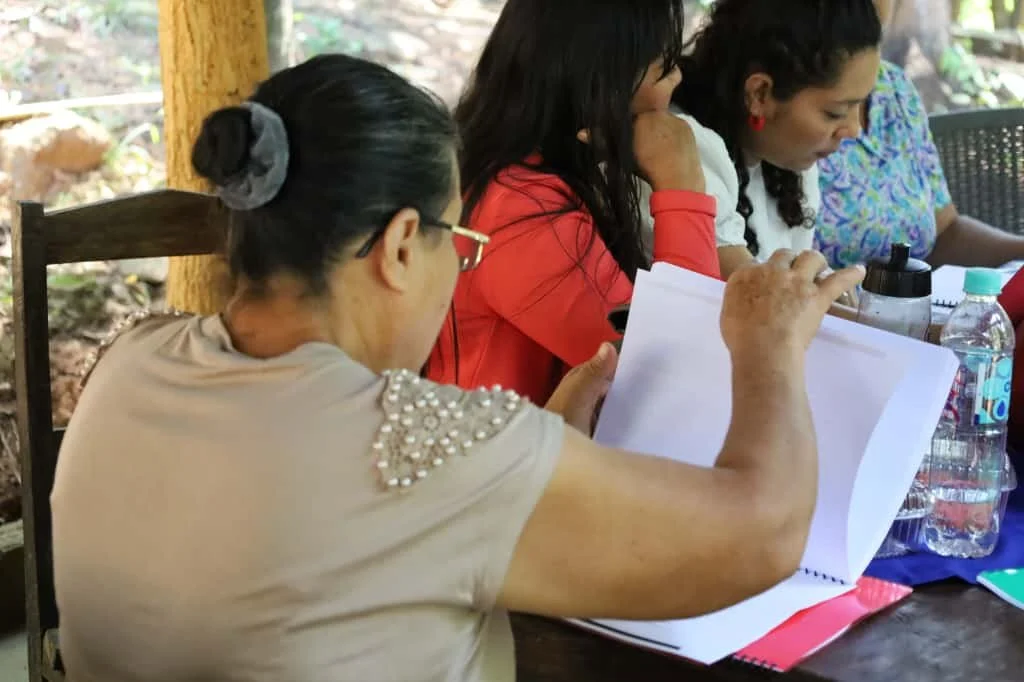
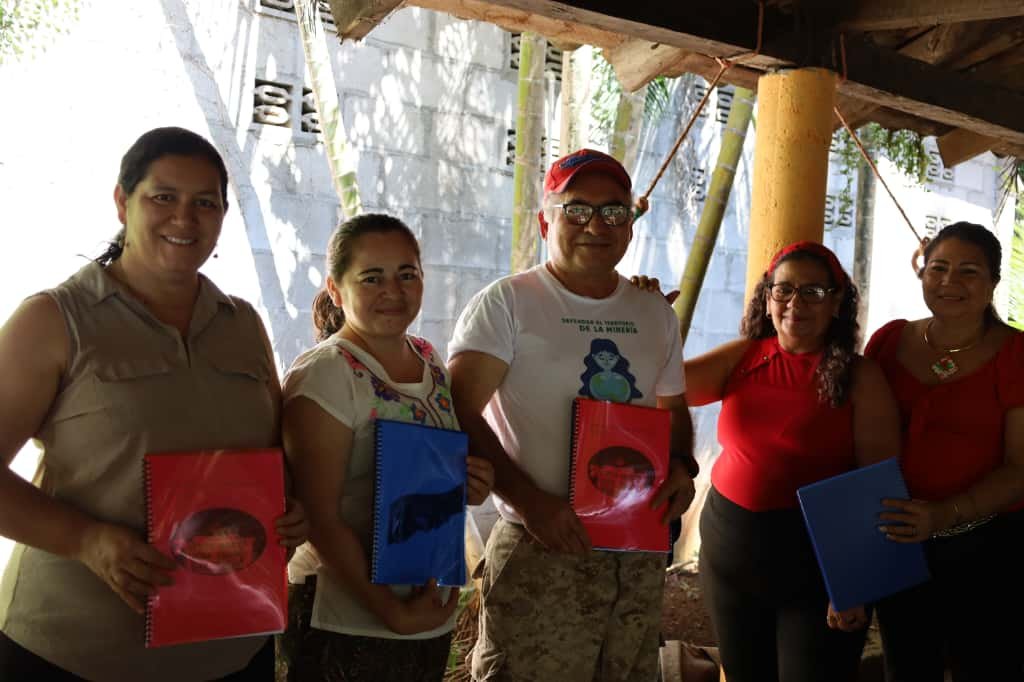
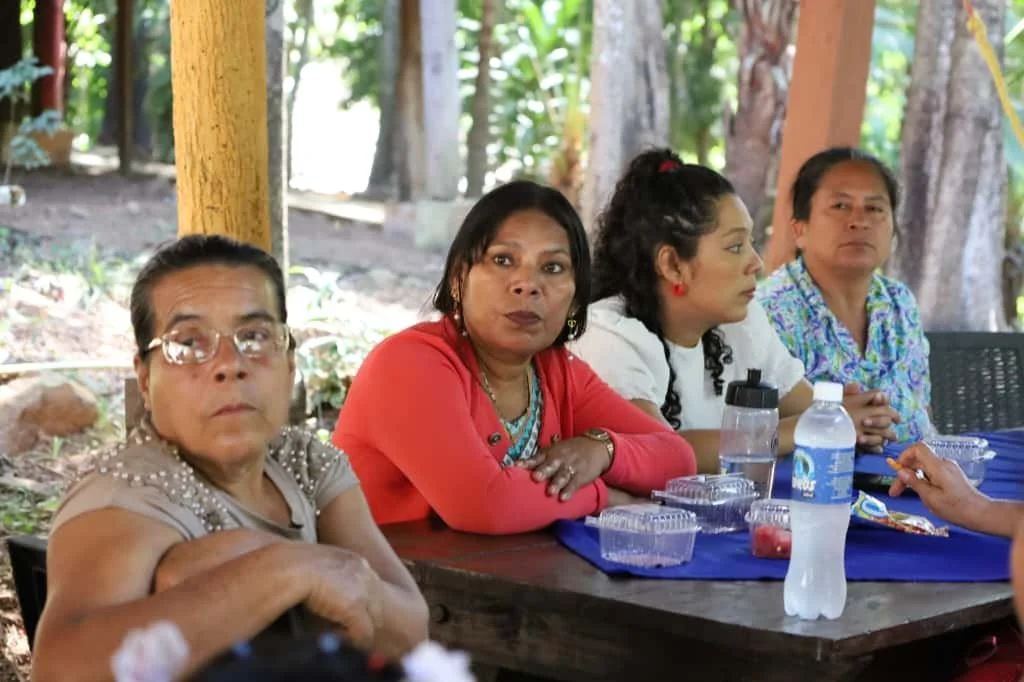
In May 2025, community members in Santa Marta came together for a series of participatory workshops focused on strategic planning for memory, education, and community-led organizing. With the involvement of more than 40 participants across generations, the workshops helped consolidate a shared roadmap for 2025–2030 grounded in lived history, collective care, and long-term continuity. Rather than “starting” something new, the process deepened work the community has sustained for decades, and clarified priorities for the Casa de la Memoria [Memory House] (as a physical and digital space), sites of memory, intergenerational education, artistic participation, and women’s memory as a pillar of community knowledge. The workshops also reaffirmed that the future Committee of Historical Memory, chosen by community assembly, will guide coordination and continuity of the initiatives.
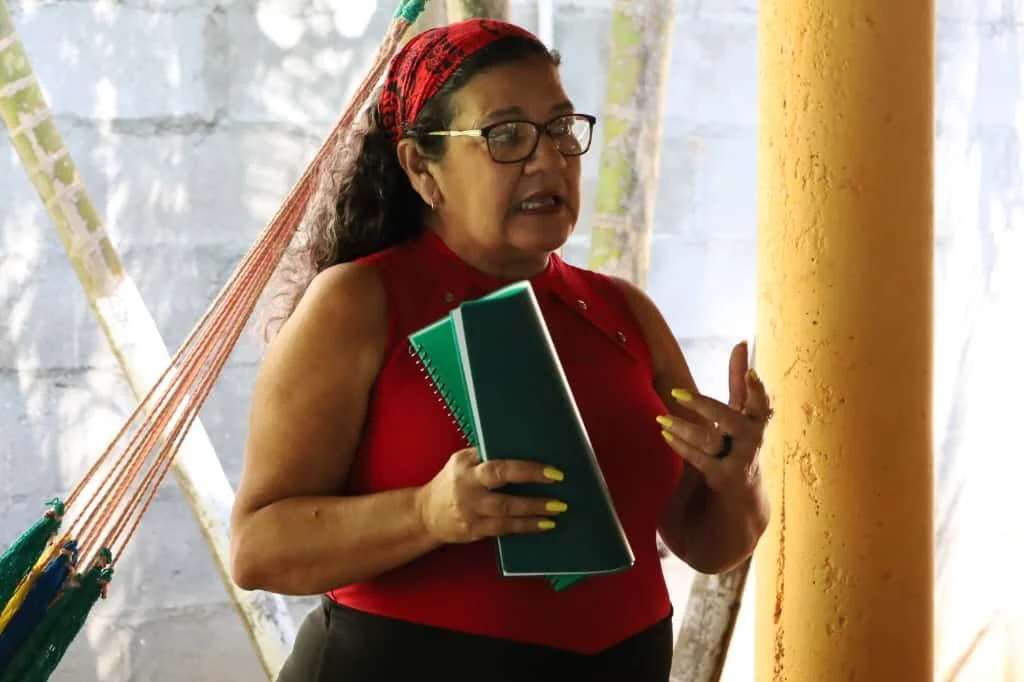
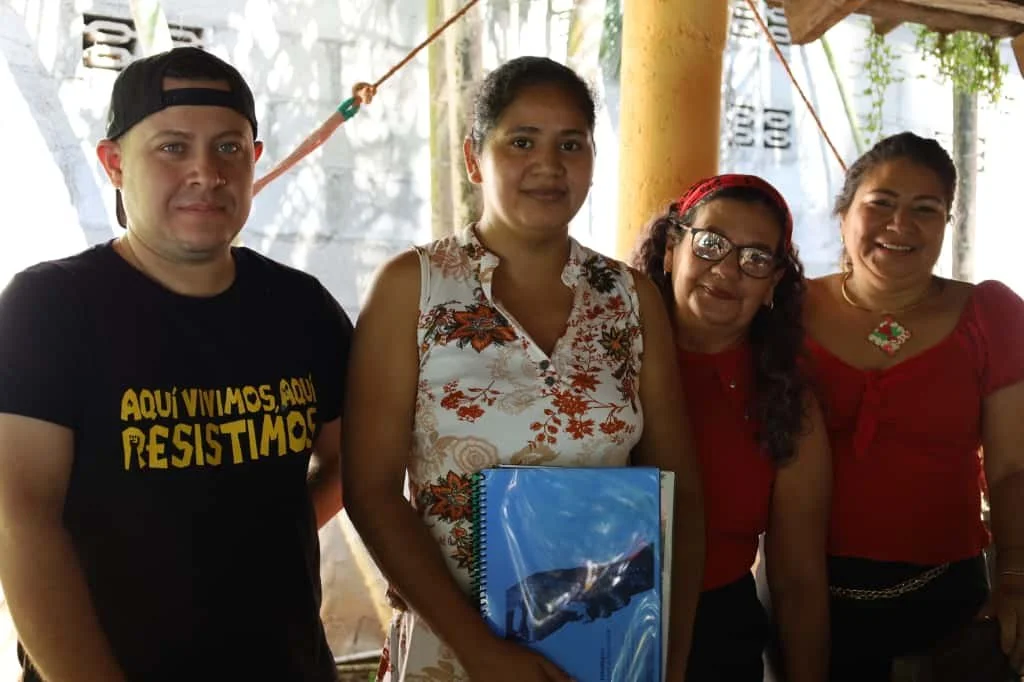
The Surviving Memory in Postwar El Salvador research initiative is supported in part by funding from the Social Sciences and Humanities Research Council of Canada, Western University, Ferris State University, the Canadian Foundation for Innovation, and the Ontario Research Fund.
Research-Creation in Action: Building a Community Roadmap for Memory, Education, and Digital Access
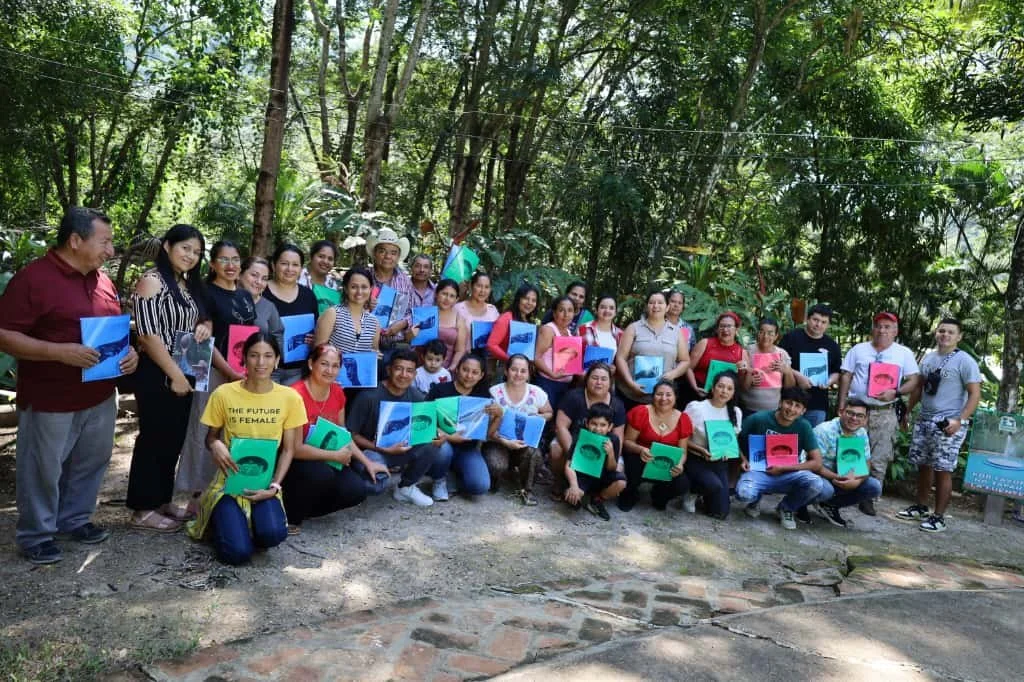
Over the past year, research activities with the Santa Marta (in Cabañas, El Salvador) community have focused on strengthening community-led memory work through collaborative research-creation. This has included documenting priorities for a Casa de la Memoria [Memory House] that is both physical and digital, advancing the organization of testimonies, photographs, and music for long-term preservation, and identifying opportunities for youth involvement in documentation and digital skills. Community discussions also highlighted the importance of mapping and caring for sites of memory, rivers, hills, caves, paths, and community spaces, so future generations can connect landscape to testimony through commemorations, plaques, and digital routes or maps. Across these activities, the work emphasizes intergenerational learning and participatory cultural practices (theater, music, embroidery, storytelling) as essential ways memory remains alive and accessible within and beyond Santa Marta, including for diaspora communities.
The Surviving Memory in Postwar El Salvador research initiative is supported in part by funding from the Social Sciences and Humanities Research Council of Canada, Western University, Ferris State University, the Canadian Foundation for Innovation, and the Ontario Research Fund.
Community Conference on Memory, Trauma, and Mental Health
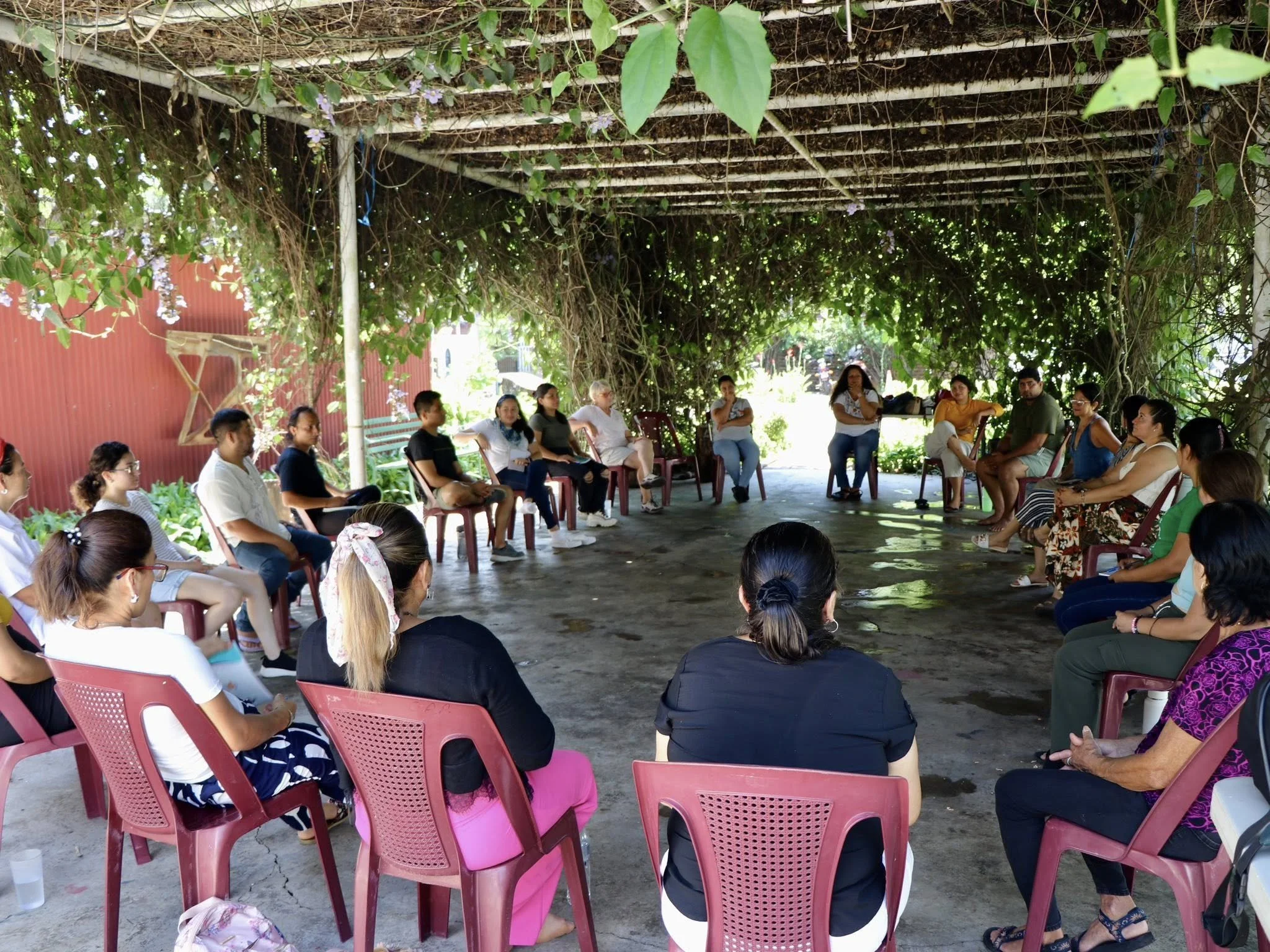
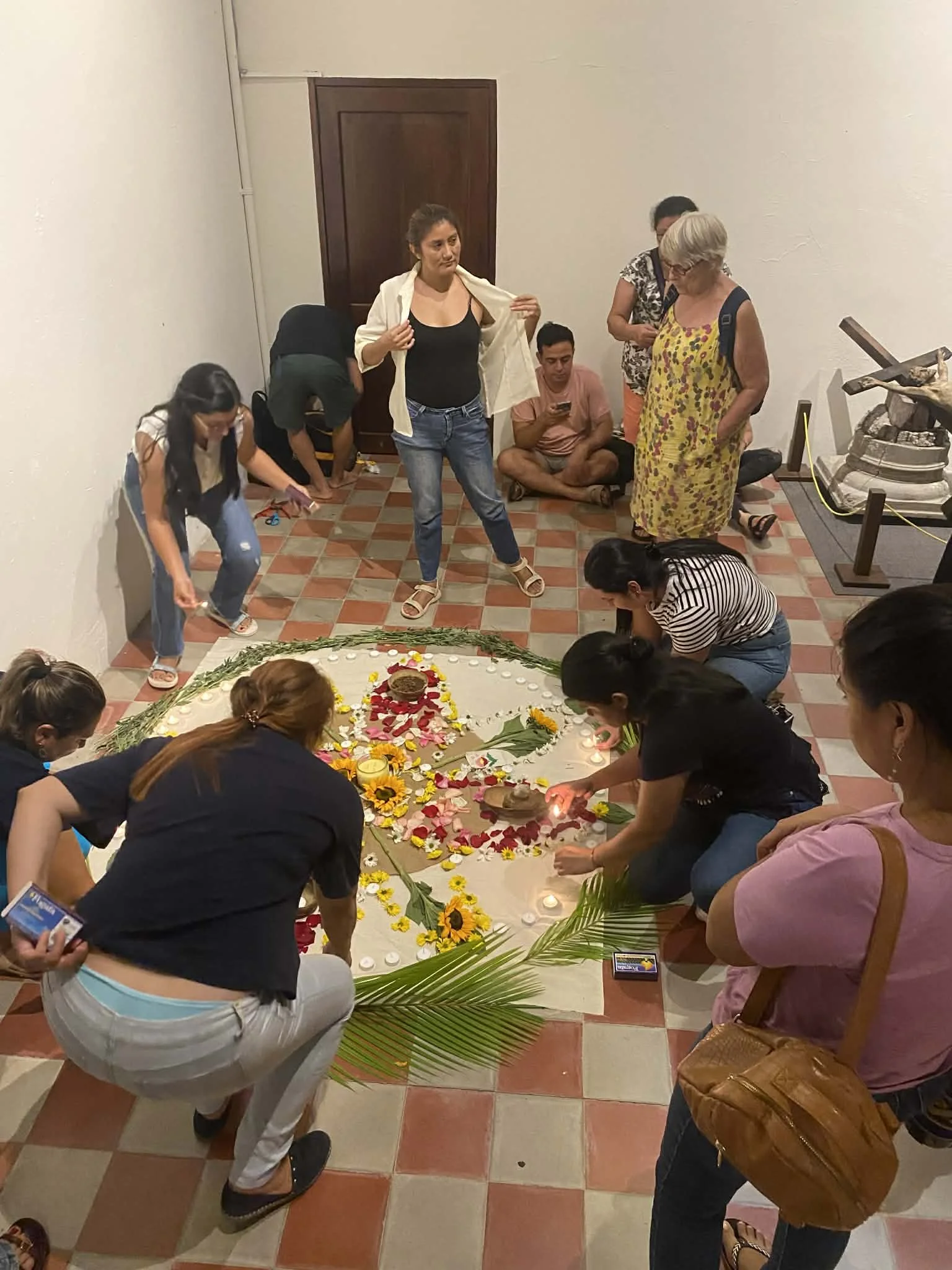
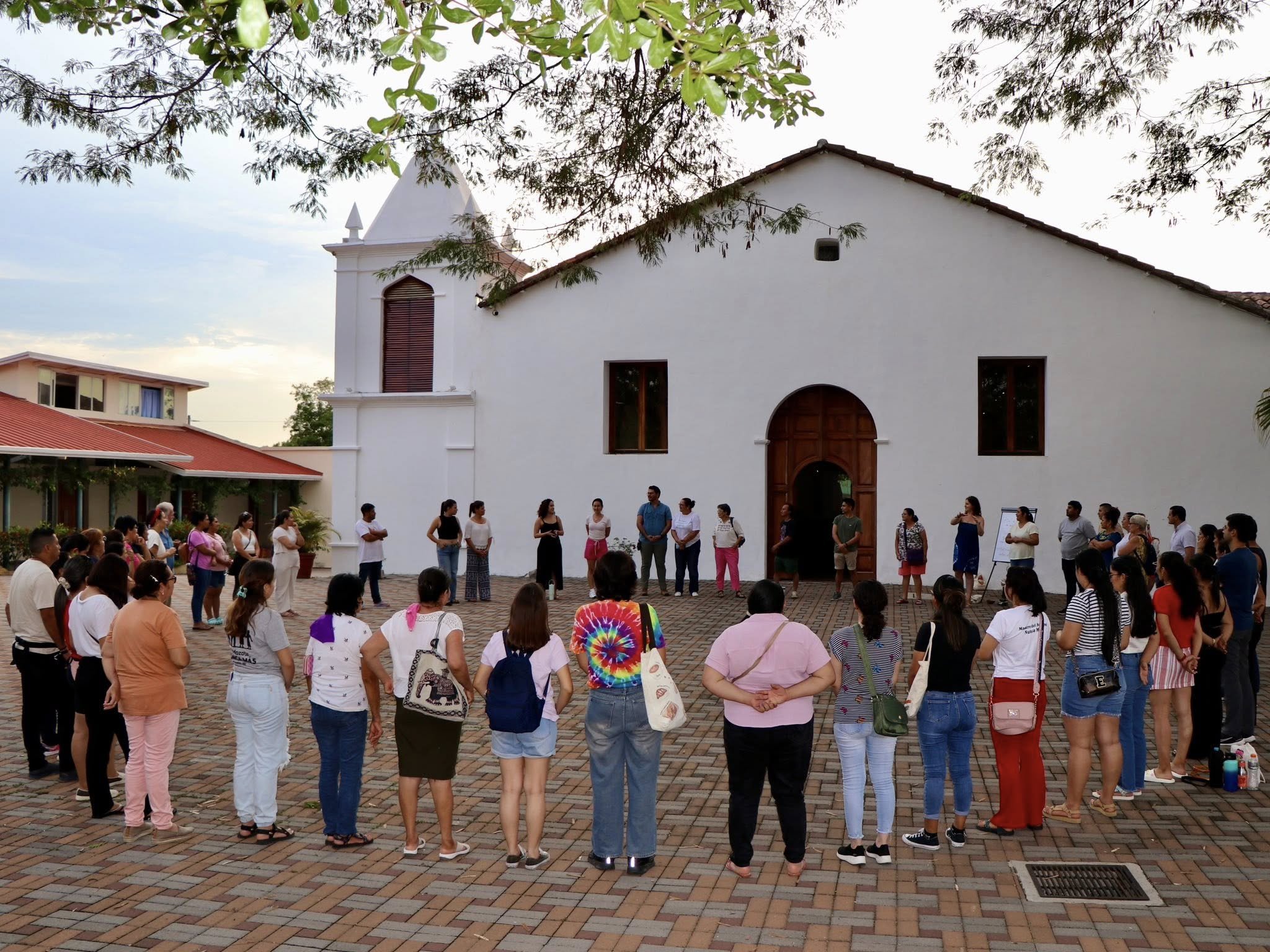
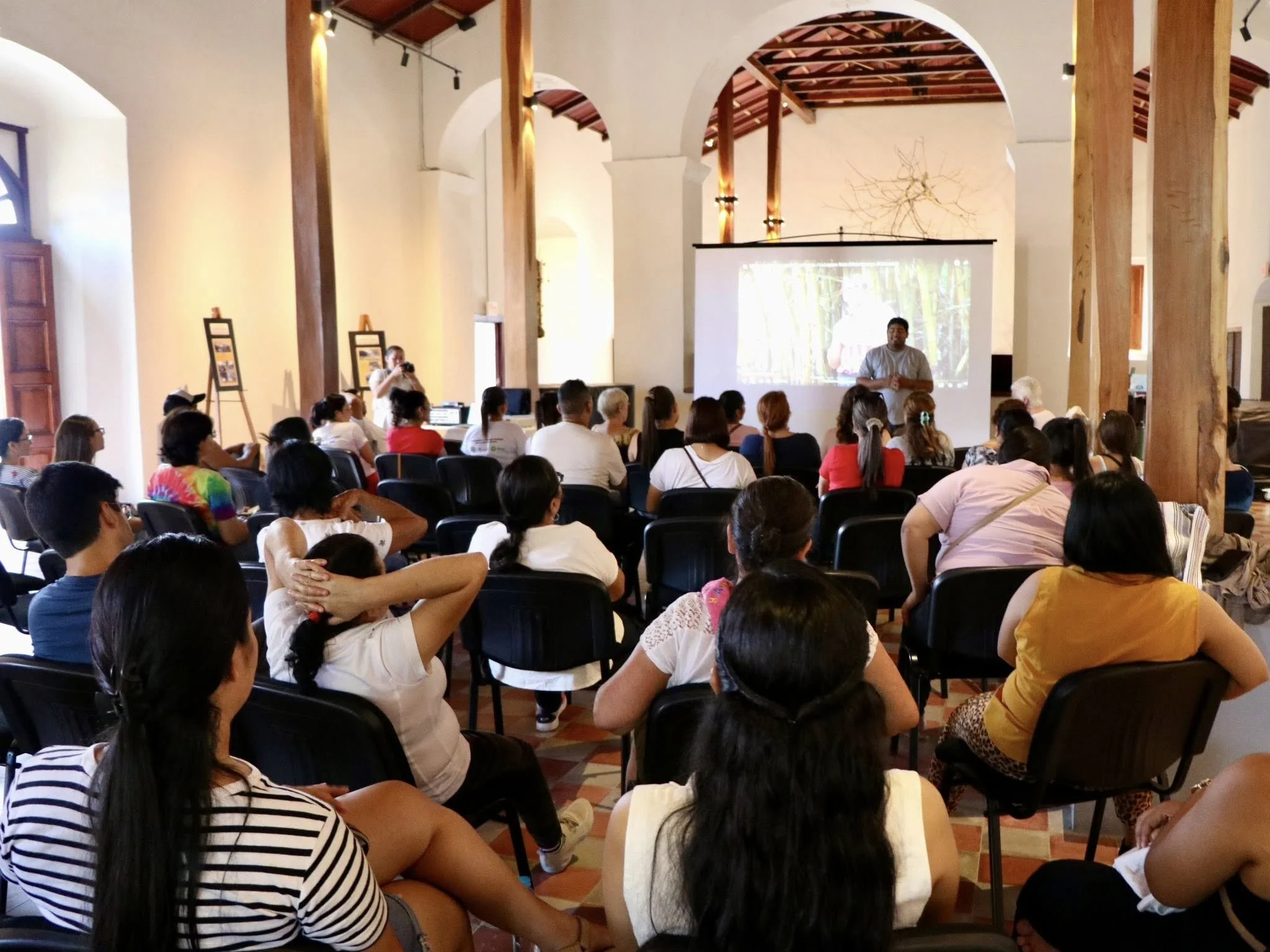
In May 2025, the Surviving Memory in Postwar El Salvador project co-organized the conference “Memoria, Trauma y Salud Mental: Intercambio de Experiencias para la Praxis Comunitaria e Intergeneracional II” in Suchitoto, El Salvador. The event brought together 65 participants, including community leaders, health professionals, artists, educators, and researchers from El Salvador and international partner organizations, to exchange experiences and strategies for addressing the long-term psychological and social impacts of war and violence in post-conflict communities.
Building on the first conference organized in Arcatao in 2023, the gathering created a space for dialogue between community-based practitioners and mental health professionals working in rural regions affected by the Salvadoran Civil War. Workshops and discussion sessions explored a range of topics including trauma and memory, community-based mental health practices, the role of art and storytelling in healing processes, youth engagement, and strategies for strengthening local support networks.
Participants emphasized the importance of culturally grounded and community-driven approaches to mental health that integrate historical memory, collective care, and intergenerational dialogue. The outcomes of the event will contribute to a bilingual research report documenting key insights and recommendations for future community-based mental health initiatives in the region.
The Surviving Memory in Postwar El Salvador research initiative is supported in part by funding from the Social Sciences and Humanities Research Council of Canada, Western University, the Canadian Foundation for Innovation, and the Ontario Research Fund.
Conducting Fieldwork for Community Books: Las Vueltas, April-May 2025
The Las Vueltas Research Team met in Las Vueltas in late April and early May 2025 to advance the creation of a community-bsed comic and the completion of the Las Vueltas Community History Book, both focused on documenting the history of resettlement and popular organization in Las Vueltas. The team includes community organizers Heidi Calderón, Nelson Rodríguez, Marvin Alas, and Juan Carlos; Salvadoran-Canadian artist Jessica Larios; Nicaraguan-Canadian research assistant Sabrina Del Bello Guatemala; and assistant professor of Anthropology Beatriz Juárez-Rodríguez (Carleton University).
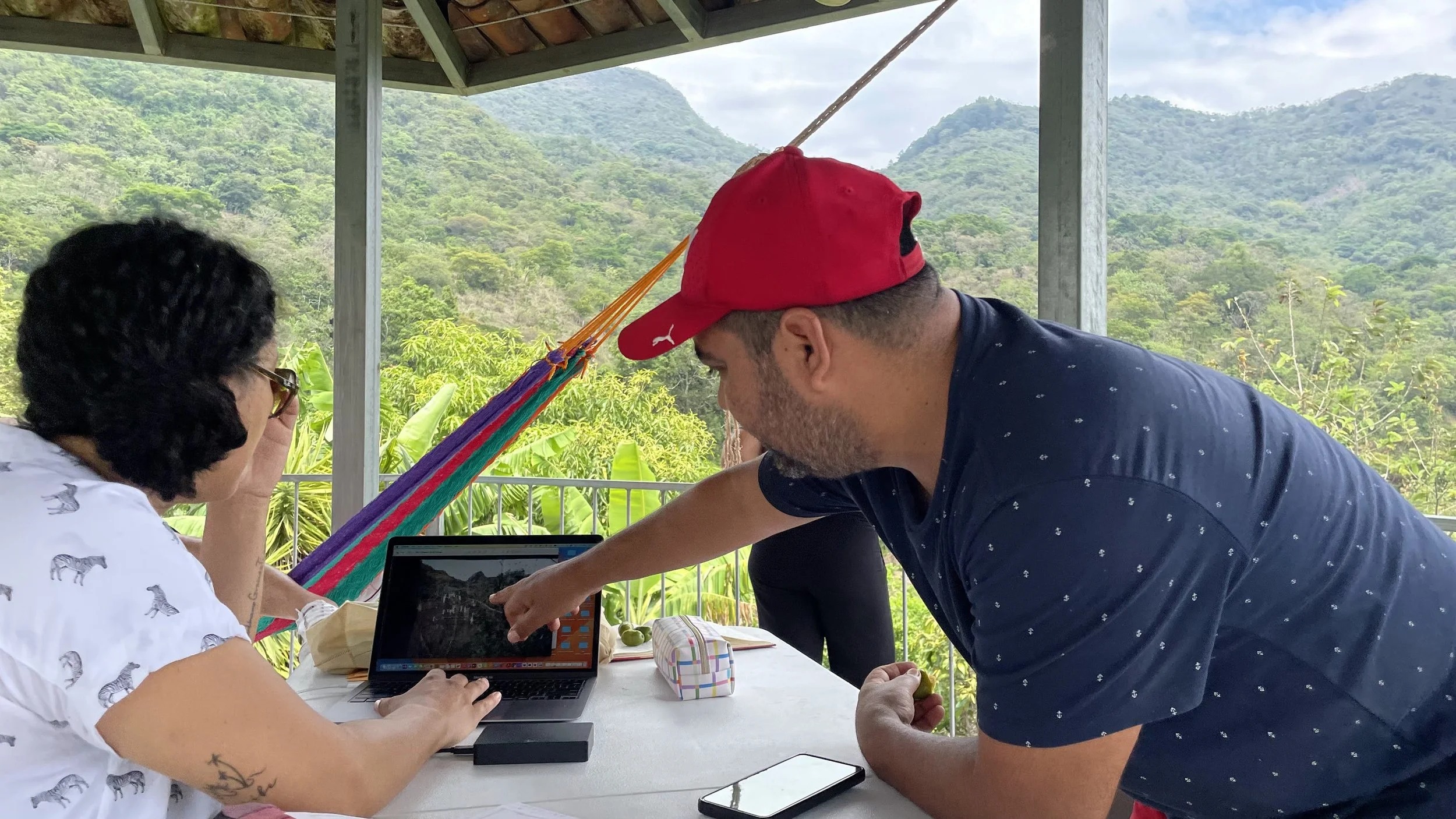
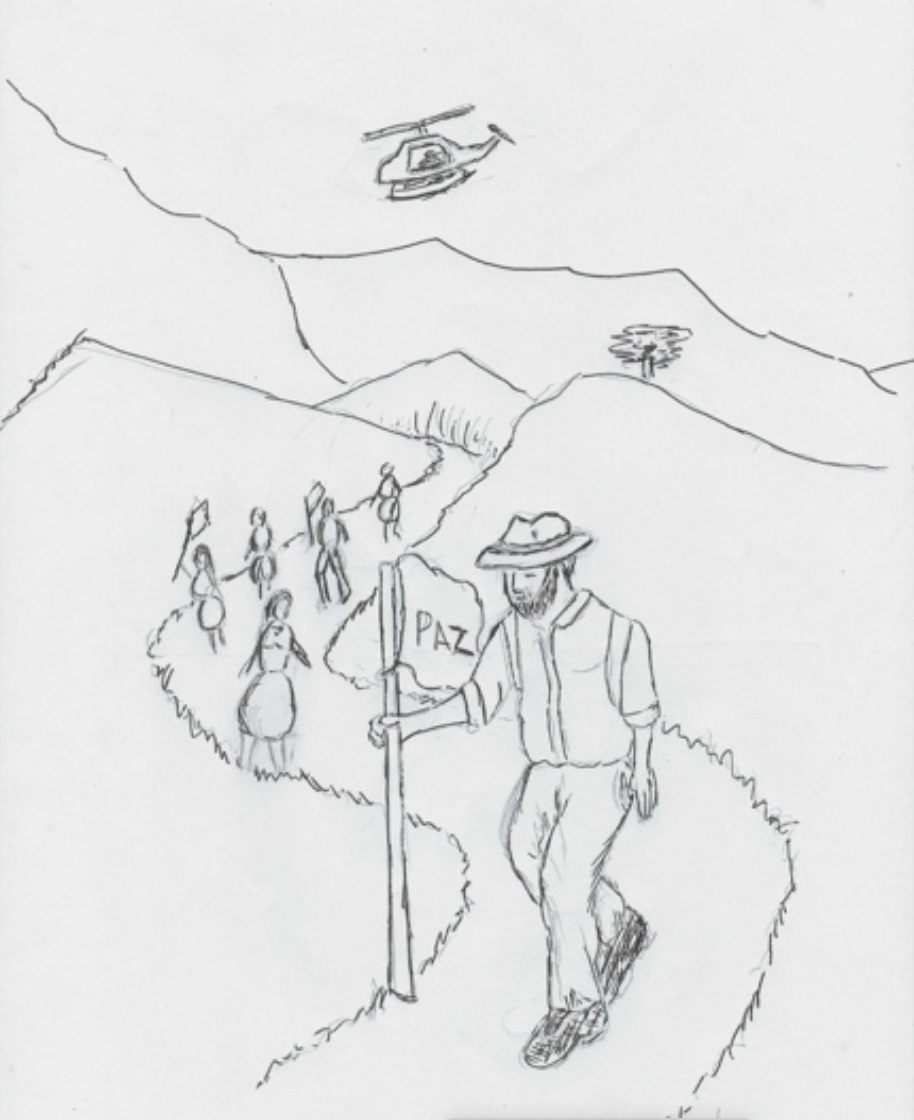
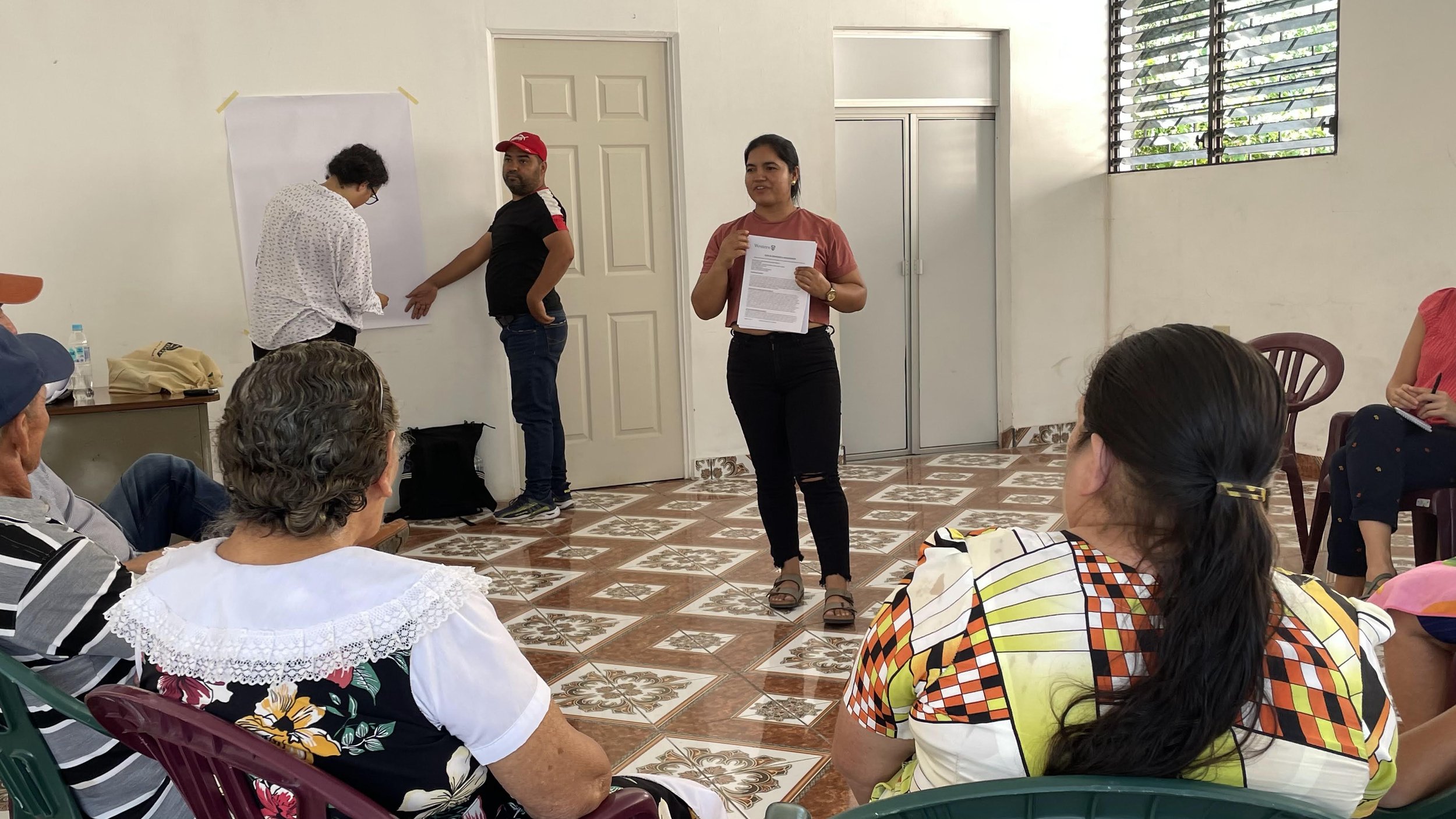
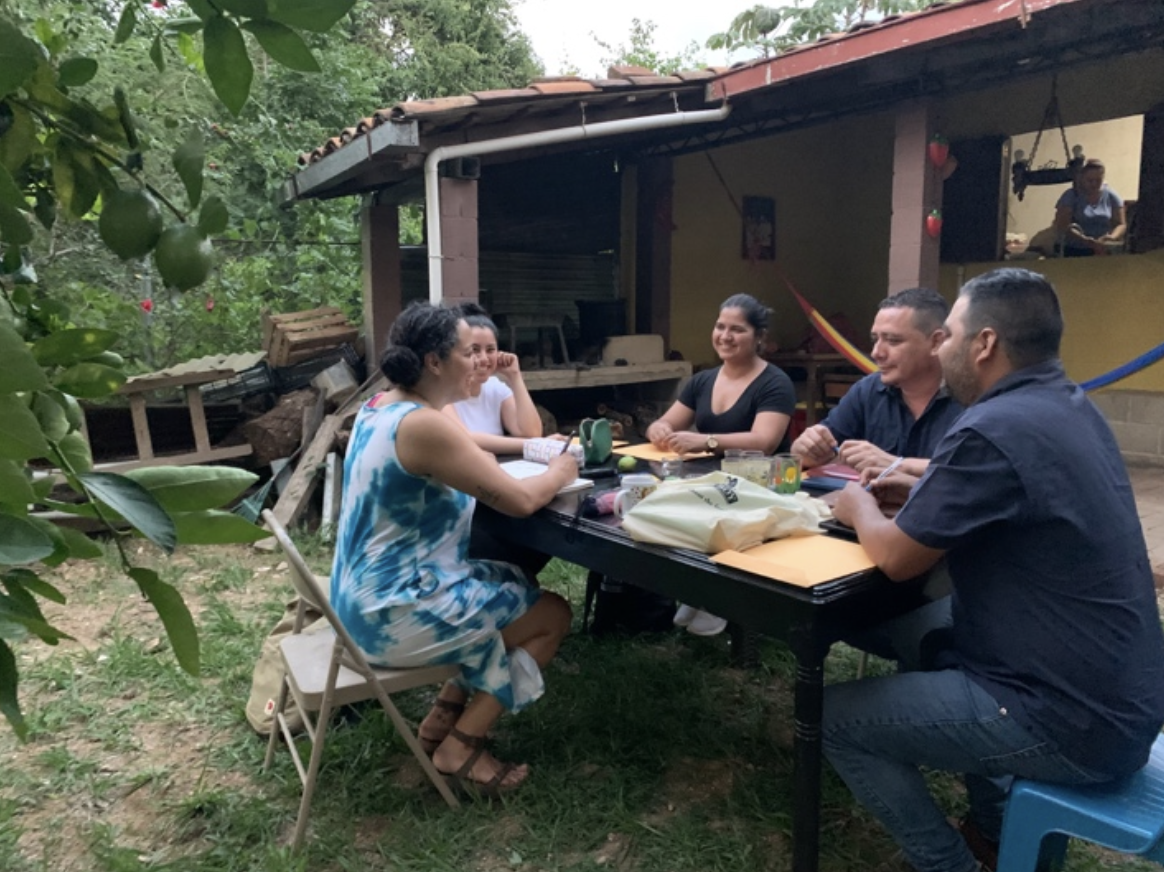
Over several days, the research team conducted in-depth interviews, creative workshops, community workshops, and planning sessions with members of the community research committee and the broader Las Vueltas community. The work centers community voices and drawing memories in documenting their own history.
The Surviving Memory in Postwar El Salvador research initiative is supported in part by funding from the Social Sciences and Humanities Research Council of Canada, Western University, Carleton University, the Canadian Foundation for Innovation, and the Ontario Research Fund.
Music Team works on song archive, songbooks, and article publications
The Music team of the Surviving Memory project continues their work to document songs about the civil war, while also publishing new research about their findings.
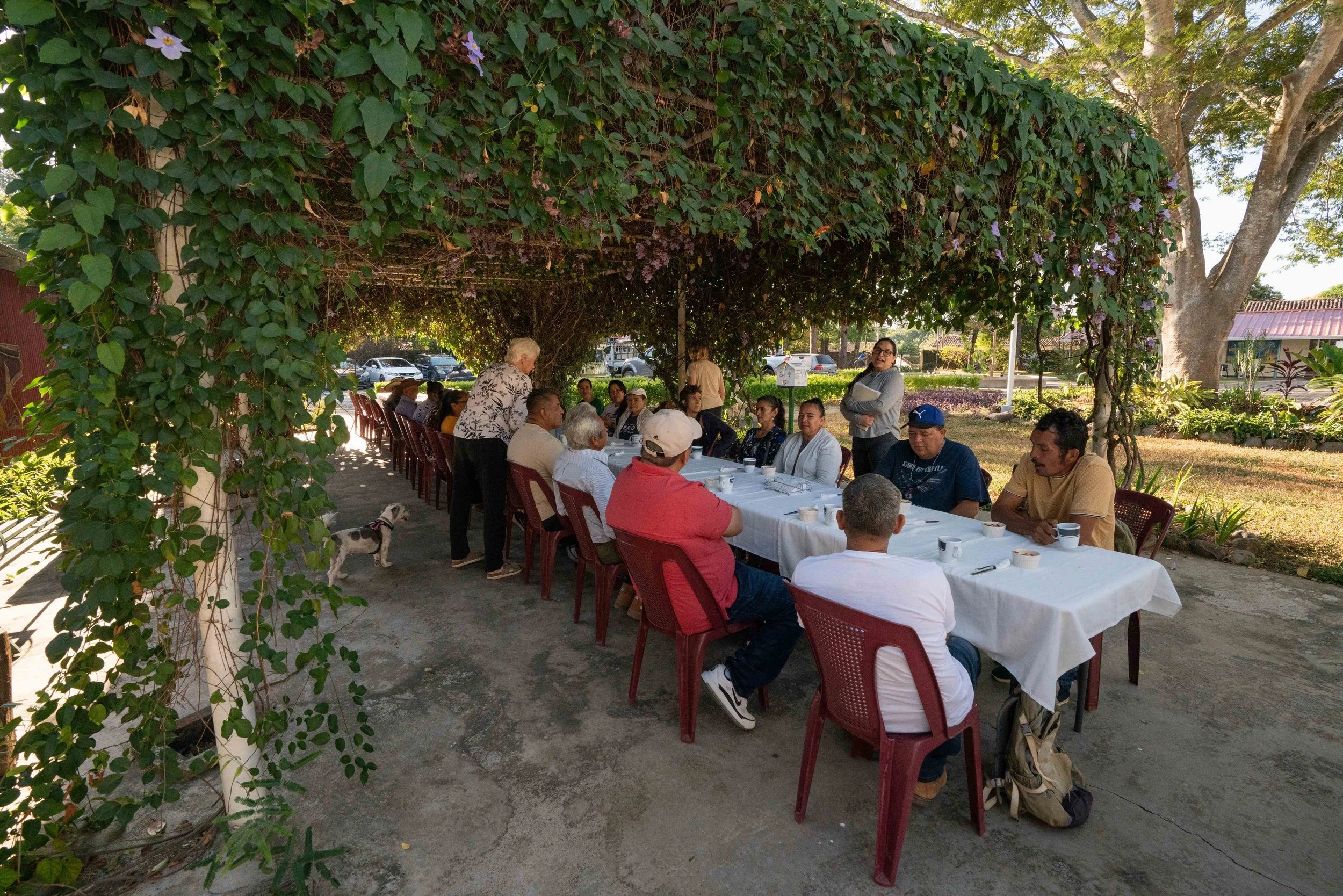
Work continues to build a digital archive of songs from the war. Joel Martinez has spent several years supplementing our historical collection with new recordings of remembered songs from the war. He, Tata Méndez, and Emily Abrams Ansari are working together to build an archive that will effectively serve the needs of the community, helping to educate future generations about the war. This week, Tata is in El Salvador sharing a prototype for the archive design in workshops in Suchitoto.
Also this week, Giada Ferrucci and Emily Abrams Ansari published an article about wartime singer-songwriter, Norberto “Don Tito” Amaya in the online magazine, Revista Elementos. This article also describes the recent Rio Lempa commemoration and the use of music at that event.

This Spanish-language article is based on a longer scholarly publication, in English, which they published last month in the Journal of the American Musicological Society. “Faith, Trauma, Resistance, and Resilience in the Revolutionary Songs of Civil War El Salvador” argues that revolutionary song served both as a political and a psychological tool for wartime campesinos and campesinas. (A non-firewalled pre-publication version is available here.)
Joel Martinez has meanwhile been hard at work stewarding two songbooks toward publication.
A songbook created by the community of Las Vueltas, Cancionero sobre Memoria Histórica Las Vueltas, is now available on the project website and will soon be printed. The online e-book includes clickable links to recordings of performances of the selected songs made by the Music Committee in Las Vueltas. We thank Kayla MacInnes for her work on the book’s beautiful design, Imelda Mejía for the embroidery that graces the front cover, and Nelson Rodriguez for his evocative drawings.

Joel is also working with Felipe Tobar, a founder of the Surviving Memory project and former Asociación Sumpul (Sumpul Association) president, to create a songbook and recordings of his own songs. Tobar is a survivor of two wartime massacres. He has written a huge collection of songs that commemorate the war in recent years.