
When Retirement is Simply Continuation: My Work with the Surviving Memory in Postwar El Salvador Project
Bernie Hammond, PhD
Professor Emeritus, Sociology/Social Justice
and Peace Studies, King’s College, Western U
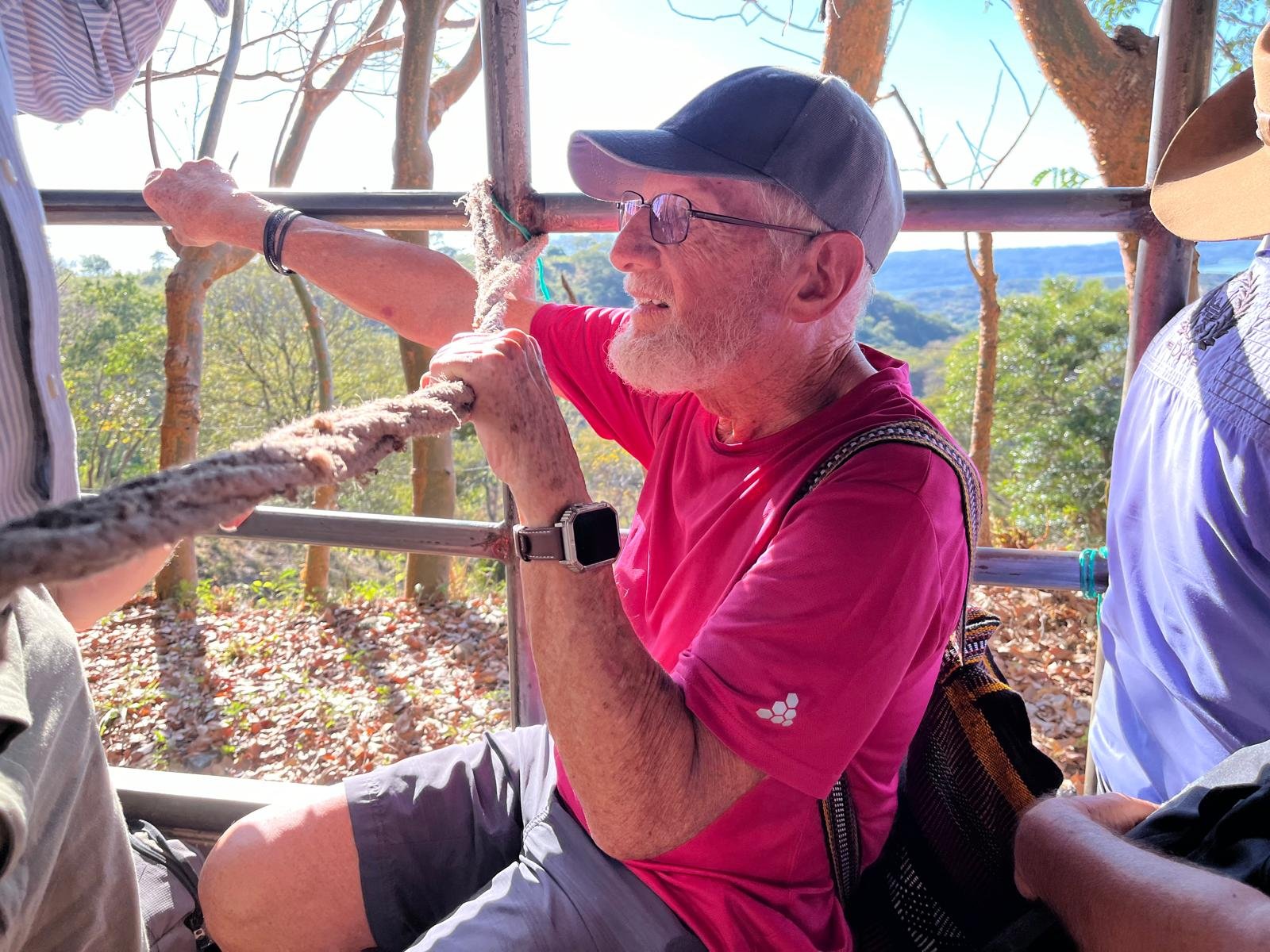
The Meaning of Retirement
After an academic career spanning 40 years and at the age of 73, I began to contemplate retirement. Many of my friends both academic and otherwise had already retired and to a person they recommended the experience very highly. But what would I do? Uniformly, friends reassured me that they were so busy in retirement that they couldn’t understand how they had ever found time to work! So, in 2015 I took the plunge. Now almost 11 years hence, I am living proof of the truth of those reassurances I had received from so many friends.
A Word About My Academic Work
By way of explanation and before I recount what it is that currently keeps me busy, a word or two about the nature of my work in academia is warranted. I am a sociologist and I had the good fortune to work for an institution that valued and supported the fact that my passion in academia was to write and teach about issues of social justice and to convey that enthusiasm to my students. I believe strongly in the concept and practice of experiential learning and to that end I built opportunities into my teaching for my students to travel to Global South countries and to learn first-hand about the structural injustices people faced, how they dealt with them and how in many cases those problems could be traced back to our own political realities.
Although I arranged for my students to travel to many parts of the world, I personally supervised those students who chose to travel to the Caribbean and Central America, specifically to the Dominican Republic, Cuba, Guatemala and El Salvador. During the first few years of retirement, I taught English to mostly youth from low-income backgrounds at a small language school in Guatemala. I also travelled frequently to the Dominican Republic to investigate the deleterious impact of a Canadian mining company on local communities. Additionally, I continued to present papers on a variety of Canadian social justice issues at an annual conference at the University of Holguin in Cuba. Then in 2017, I was offered the opportunity to participate in an extraordinary, brilliantly conceived project that investigates and supports the experiences of survivors of the civil war that ravaged El Salvador from 1980 until 1992.
El Salvador’s Civil War (1980-1992)
This 12-year conflict was stimulated by the extreme poverty brought about by a maldistribution of land and held brutally intact by an authoritarian government. This government was strongly backed by the Salvadoran military and supported by the United States in the context of the fear of Communism characteristic of the Cold War. These conditions led to the eventual formation of the Farabundo Marti National Liberation Front (FMLN), a coalition of leftist groups bent on changing Salvadoran social reality. The military responded with vicious repression including the formation of death squads and the employment of scorched-earth tactics developed by the US military in Vietnam. One of the consequences was the widespread displacement of people who frequently sought refuge in the mountains. The UN estimated that approximately 75,000 died over the course of the war. They heard 22,00 complaints of violence and attributed 85 percent of wartime violations to the Salvadoran Armed Forces . Peace Accords were signed in 1992; however, countless families were left to mourn men, women and children who not only did not survive the war but died horrendous deaths following unspeakable torture. These deaths scar the memories of a generation of Salvadorans who to this day struggle to come to terms with their loss and to remember their history through local associations dedicated to this task. These community associations are key partners in the Surviving Memory in Post-War El Salvador project.
The Project
The project was initiated in 2017 by a group of civil war survivors, architects, social movement leaders, and my colleague, Dr. Amanda Grzyb in the Faculty of Information and Media Studies at Western University. So far, the project has focused on communities in the northern department of Chalatenango and Cuscatlán in whose mountains many sought refuge during the war. Unfortunately, these same mountains frequently became the site of many of the most atrocious massacres civilians suspected of assisting or even sympathizing with leftist groups. The project began modestly by mounting a display of photographs taken by Canadians from Oxfam Canada and other sympathizers during the conflict. This provided living relatives with the opportunity to see for the first time photos of the war time experiences of loved ones, many of whom had not survived the war. My task was to help set up the photo displays in several communities and assist local survivors to identify relatives and friends, thus giving them new insight into their experience of the war.
In doing so, I was and remain deeply impressed with the healing potential of memory in coming to terms with tragedy and suffering often buried, consciously or not, deep in one’s subconscious. Psychological services from local health care providers and mental health professionals from Western University were provided to assist those who wished them as these memories emerged. The profound healing nature of survivor memory as became evident in responses to the photographic display left me even more admiring of and committed to this overall project.
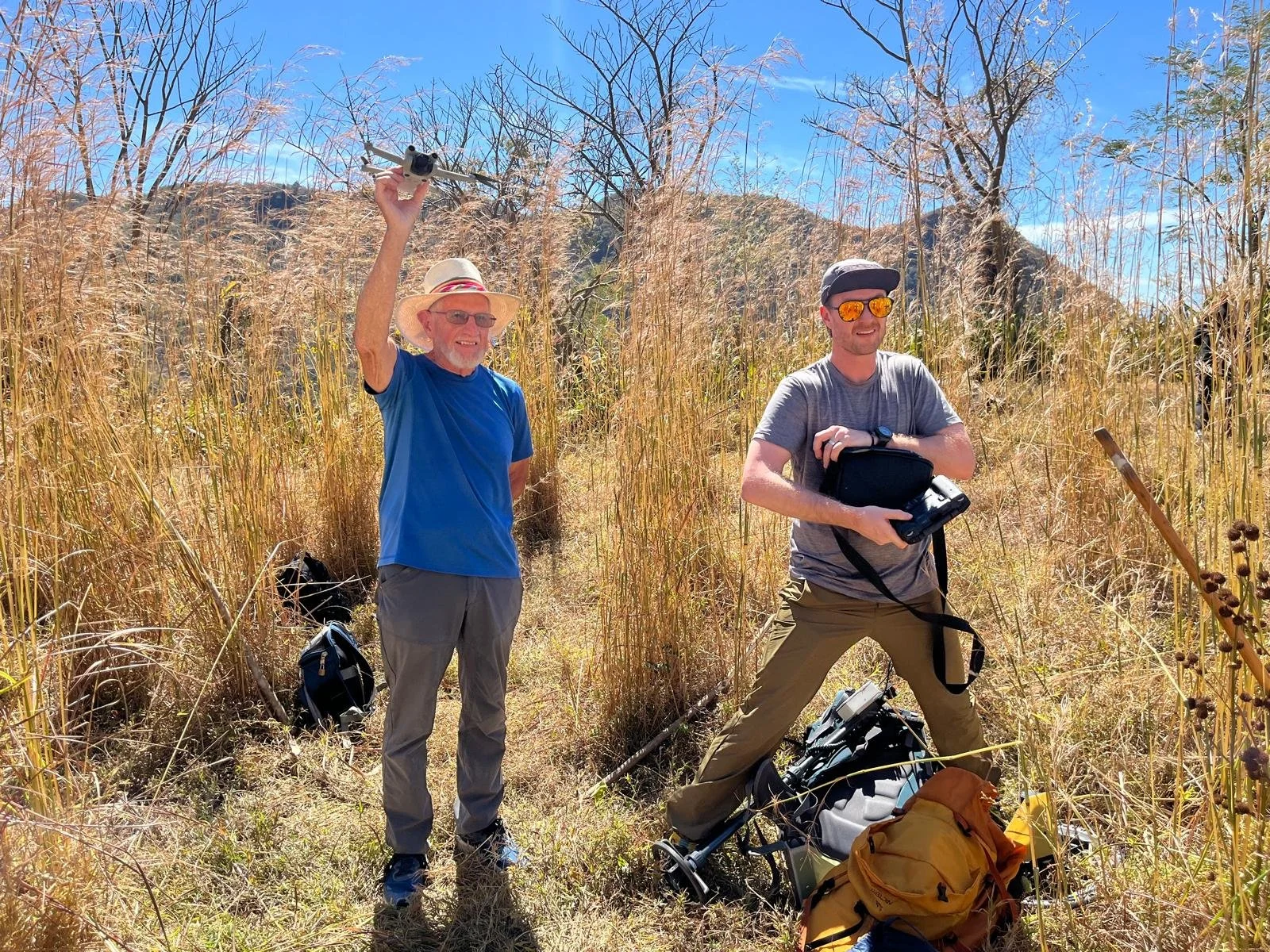
Gradually, with generous funding from the Social Sciences and Humanities Research Council of Canada, other granting organizations, and many other community and religious organizations, the scope of the project expanded. It now involves an array of dozens of academics and other professionals from many countries who assist in locating and recording the music of the revolution, in building museums devoted to preserving memories of the war, creating a memorial park at the site of one of the major massacres, and even an embroidery project stitching war memories into garments, cushions, and wall hangings. We have moved from accompanying survivors to document massacre sites with GPS to the use of drones, LIDAR surveys of destroyed villages, and Ground Penetrating Radar to locate unmarked graves . In the latter case, the team has learned directly from the Six Nations Survivors’ Secretariat, a survivor-led Indigenous organization recovering the truth about the former Mohawk Institute residential school.
My Compensation
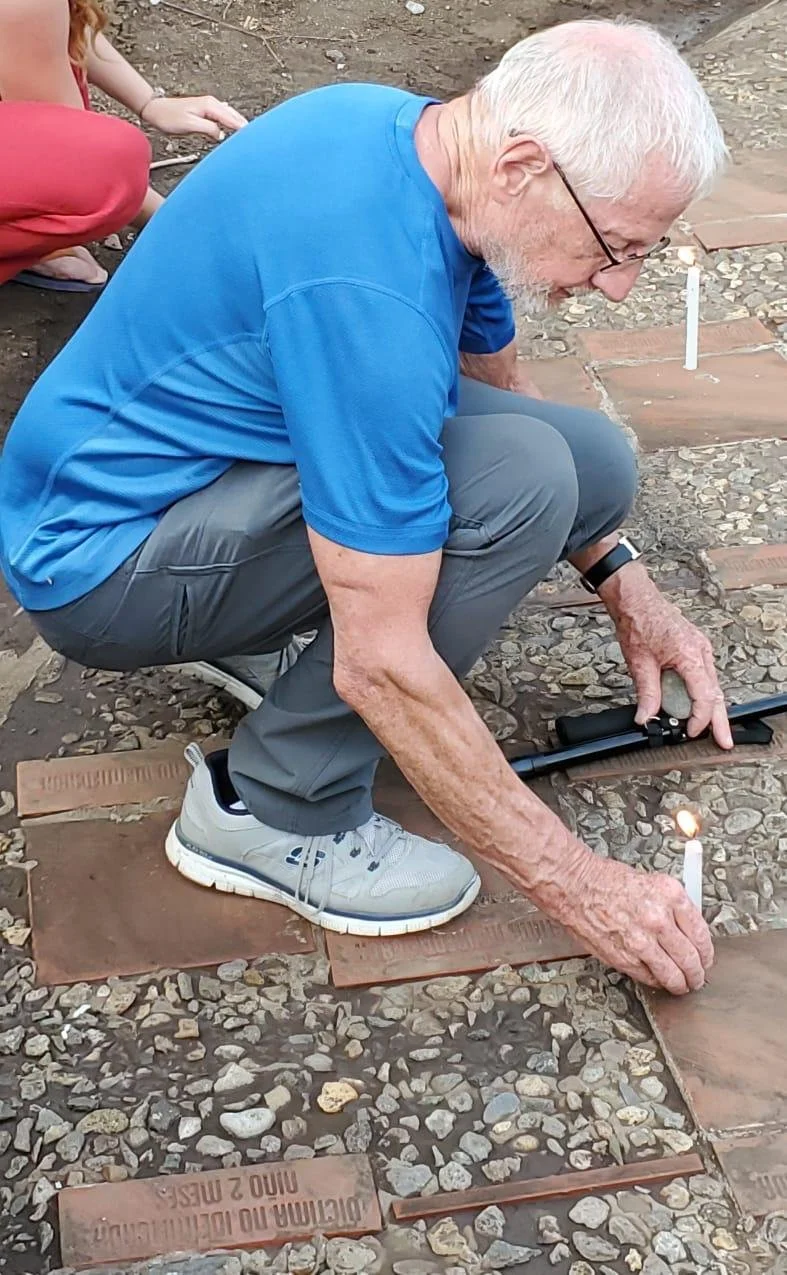
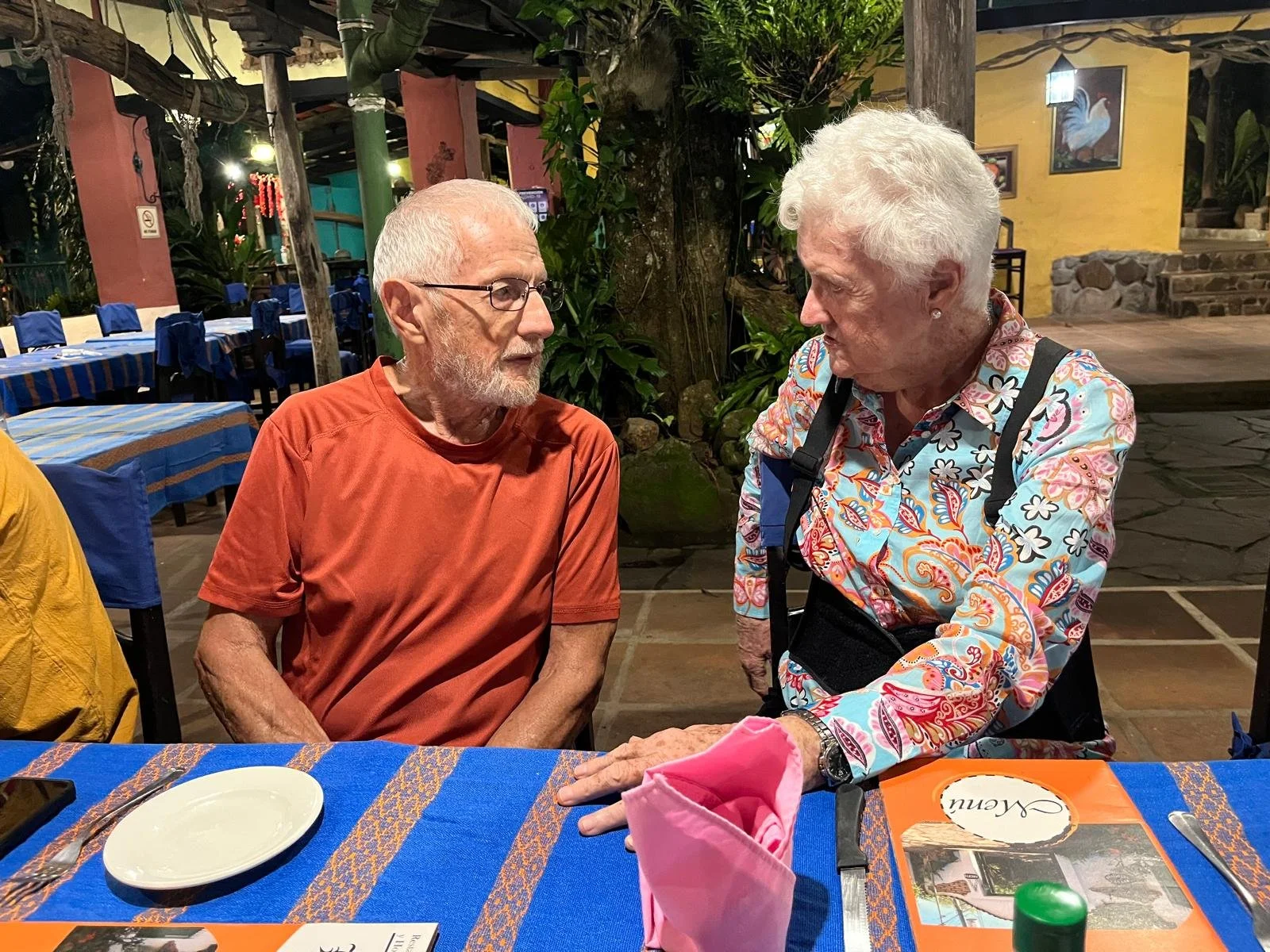
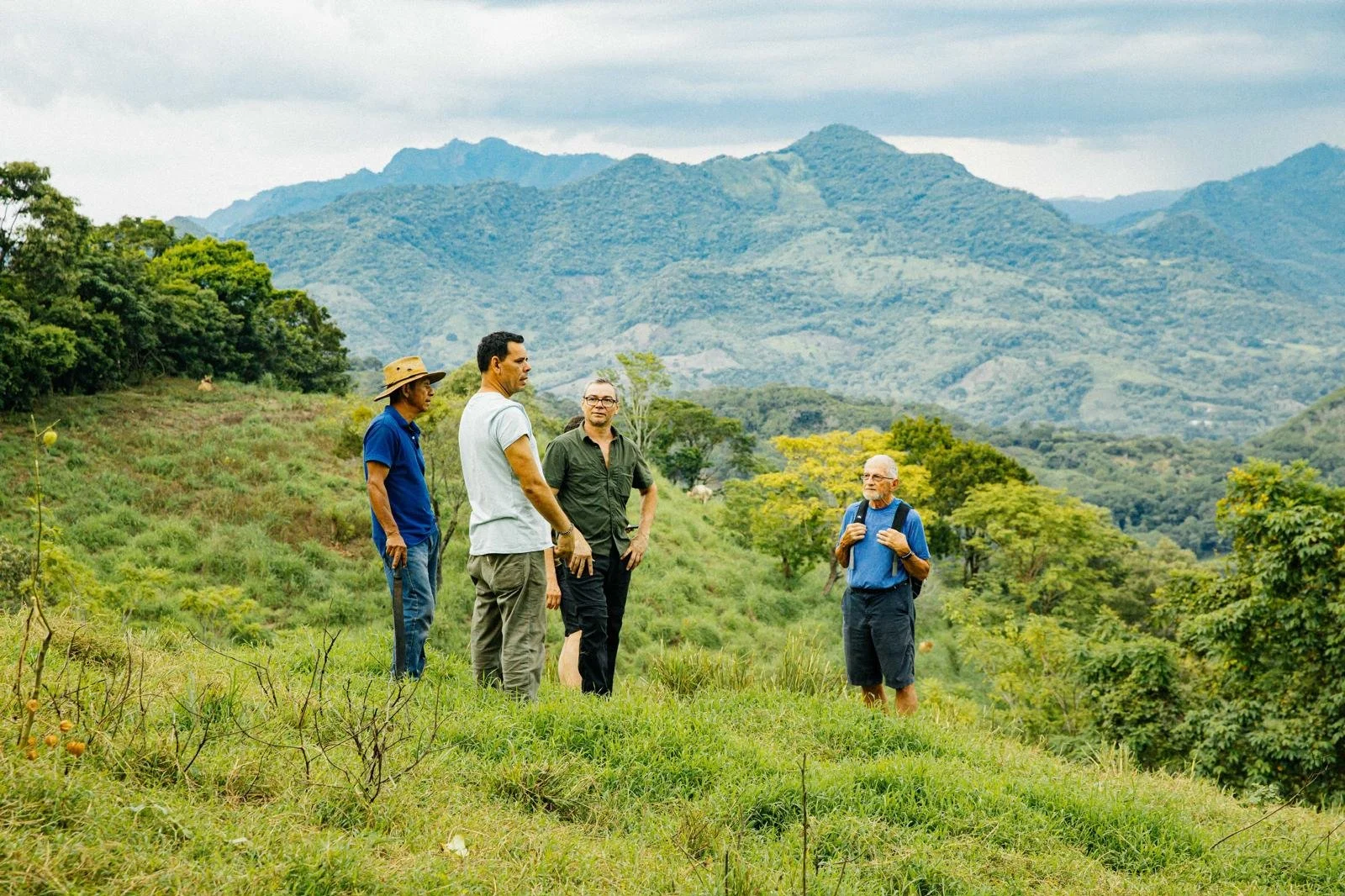
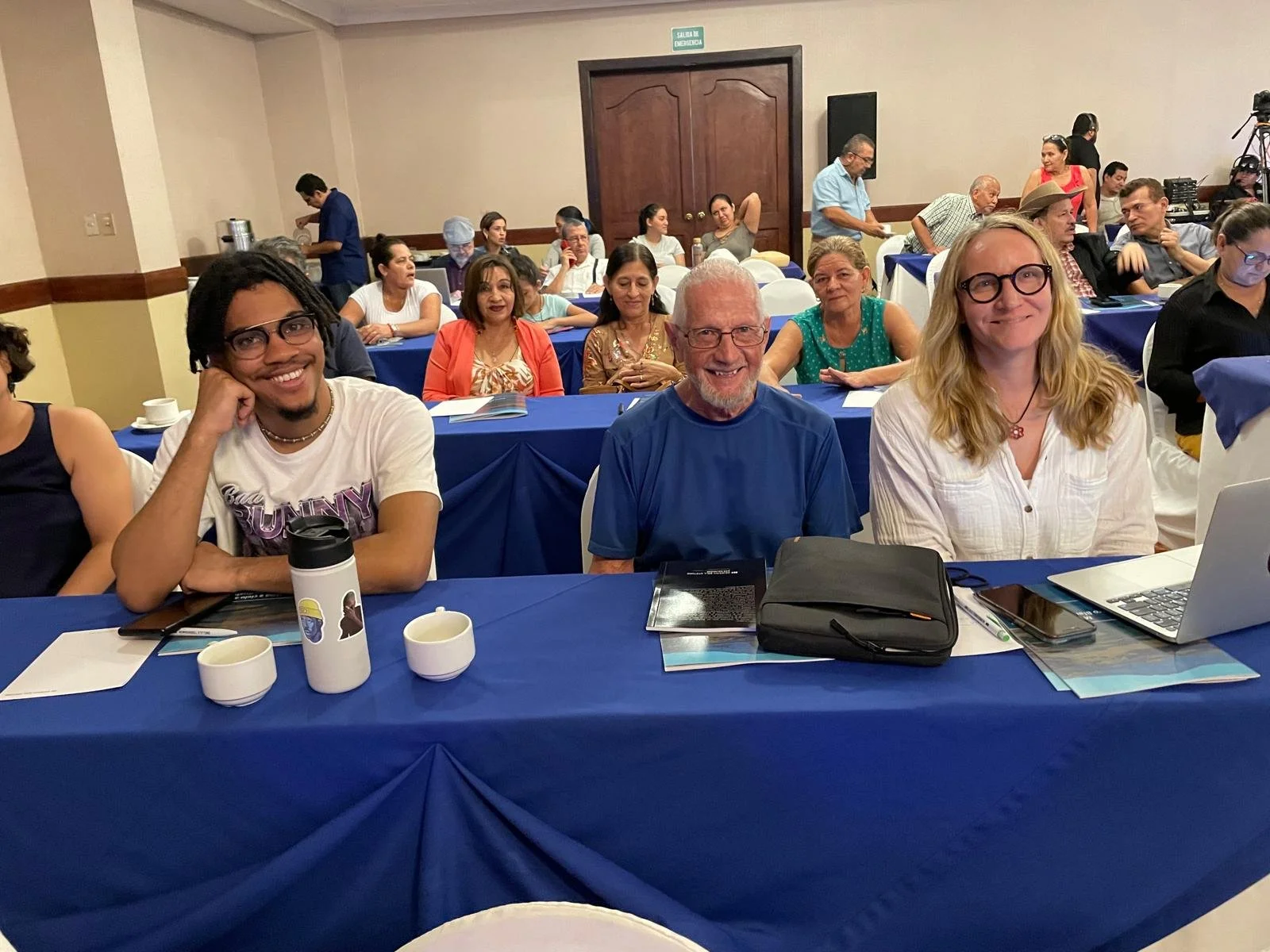
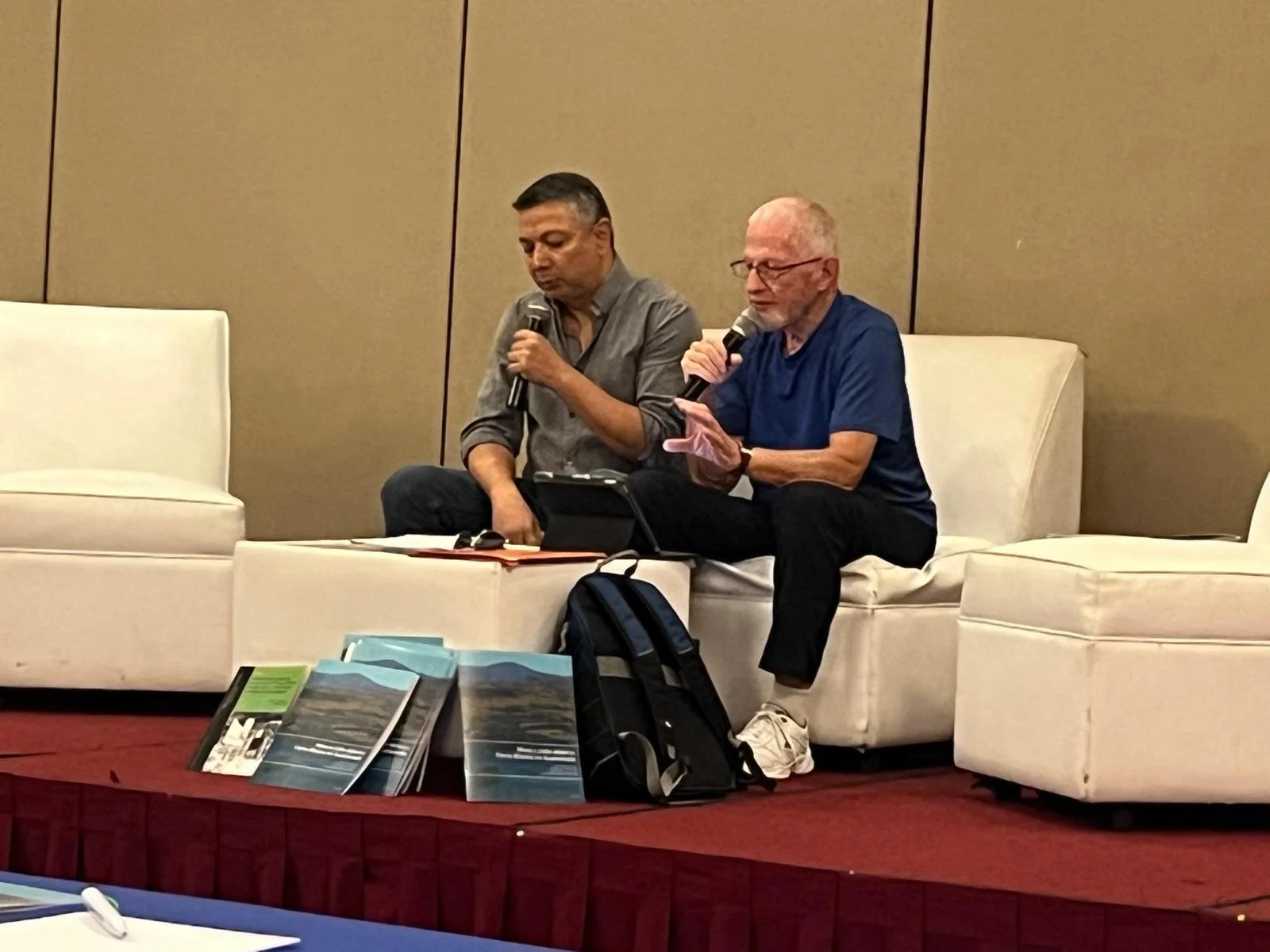
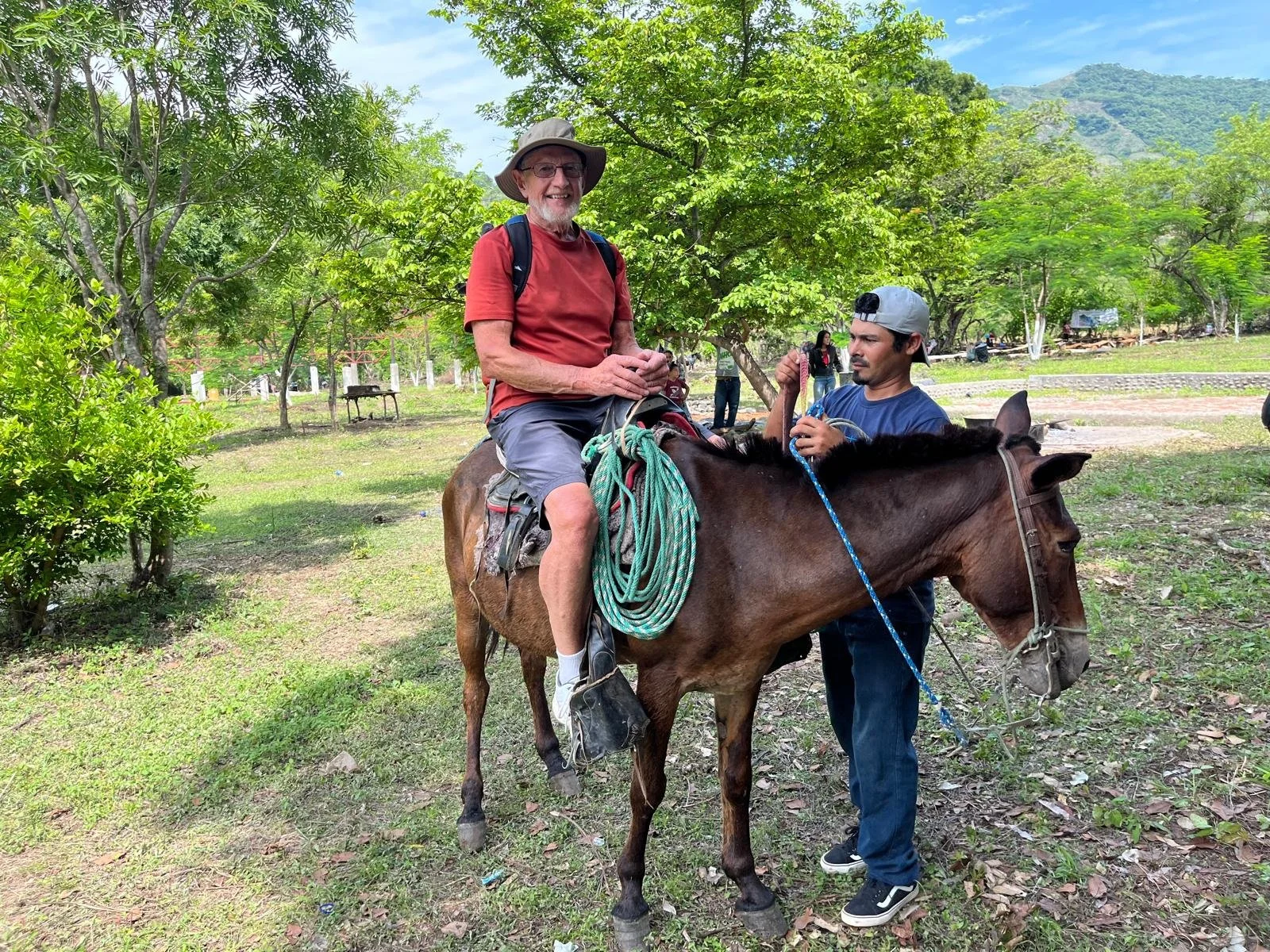
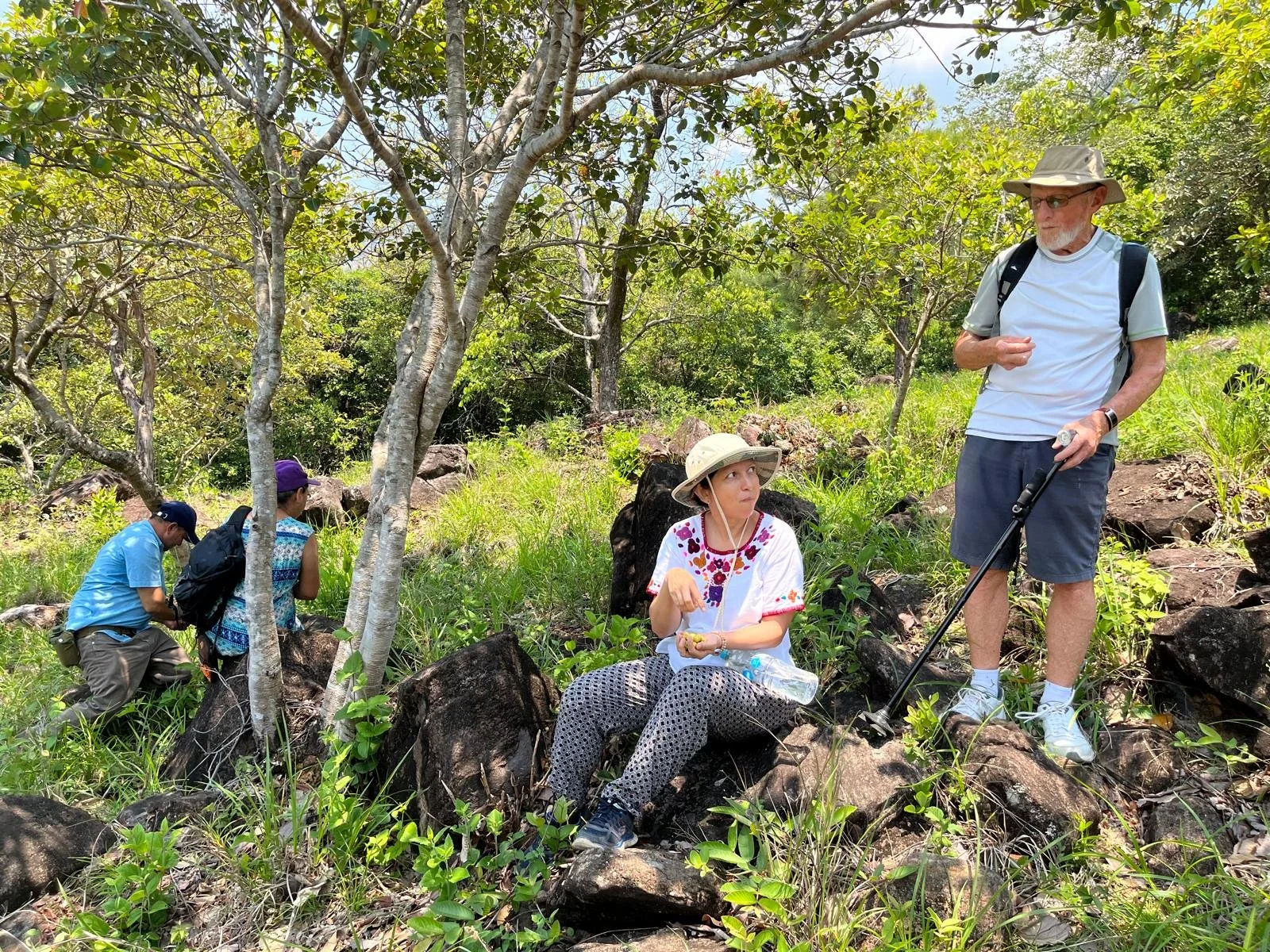
On a personal level, this project has seen me hiking through forests and up mountains while fending off mosquitos and tics, assisting in setting up interviews with survivors, checking Spanish to English translations, participating in meetings of survivor associations, and walking many kilometers over rough terrain to participate in annual commemorations of massacres. I have often joked that for me retirement has meant simply continuing to work but without a salary. I must confess, however, that whatever humble contributions I have made to the success of this project have been dwarfed by the immense pleasure of seeing its success and the satisfaction and sheer fun of working with the brilliant and congenial team responsible for its achievements.
My colleague Dr. Amanda Grzyb has a way of drawing to her people who are not only immensely talented, but who have proven to be some of the most congenial and engaging people I have ever had the pleasure of working with. Her own talents are evident, of course, in helping to conceive this project and collaborating with others to bring it to the level of success that it has achieved. Her many contributions to academic life and to the community generally are no doubt reflected in her much-deserved recent appointment to the Order of Ontario!