
From July 28 to August 1, 2026, members of the Surviving Memory in Postwar El Salvador research team participated in the annual conference of the Memory Studies Association (MSA) in Buenos Aires, Argentina. The international gathering brought together scholars, artists, activists, and community leaders from around the world to explore the politics and practices of historical memory, commemoration, and public engagement.
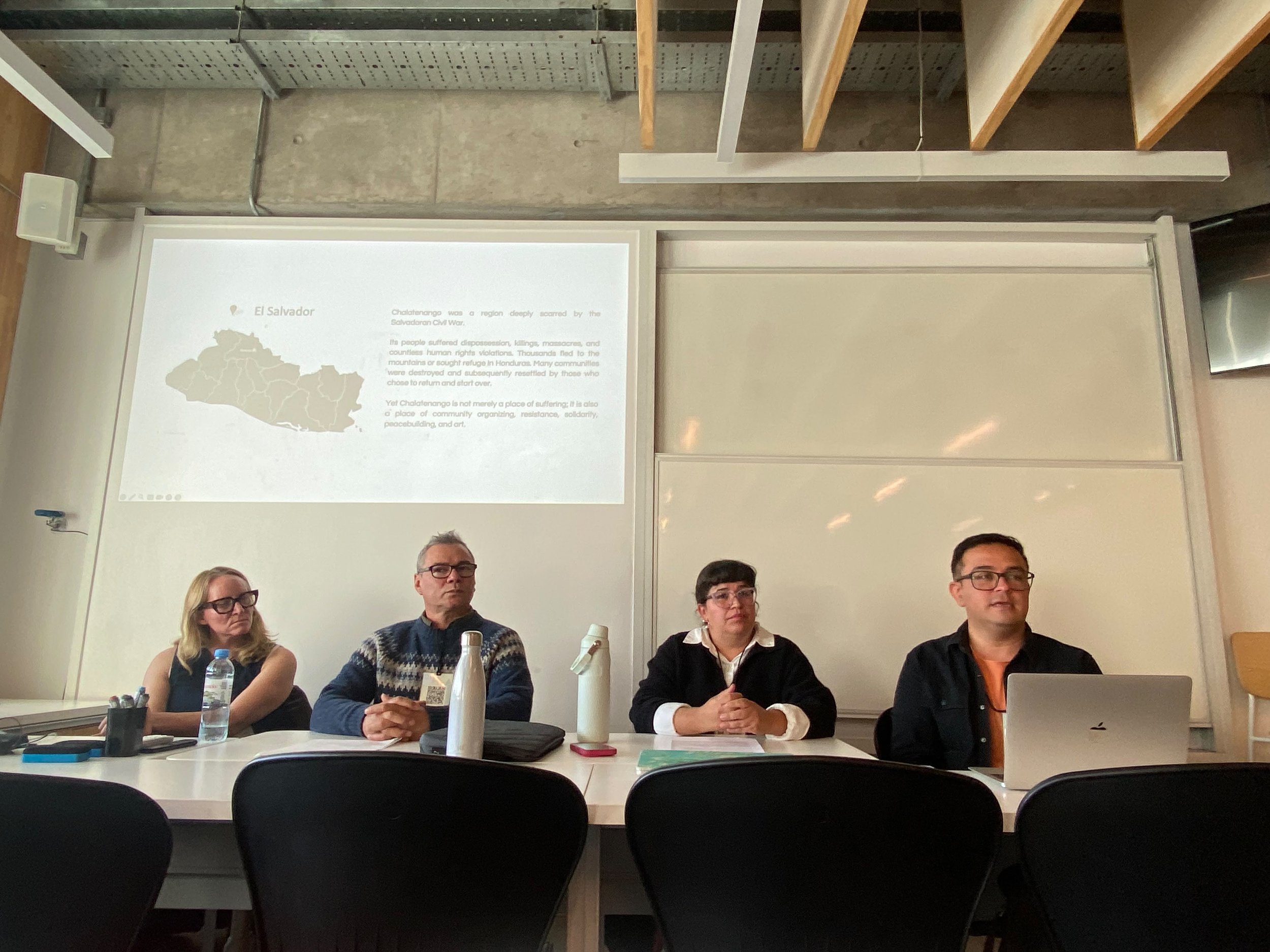
The Surviving Memory team presented a panel titled "Collaborative Memory Projects: Community-Based Documentation and Commemoration of Mass Violence as an Alternative Form of Justice." The panel featured four members of the international research partnership: Amanda Grzyb, Professor at Western University and Project Director of Surviving Memory; Reynaldo Hernández, Salvadoran civil war survivor and project co-founder; María Laura Flores Barba, Postdoctoral Scholar at Western University; and Francisco (Fran) Mejía, Salvadoran community leader and member of the RAÍCES Theatre Group.
Drawing on more than a decade of collaborative research with survivors of the Salvadoran Civil War (1980–1992), the panel explored how community-based historical memory initiatives can contribute to processes of truth-seeking, public education, commemoration, and justice. The four presentations highlighted different aspects of the team's collaborative work:
Amanda Grzyb, "Commemoration as Justice: Collaborative Memorial Design in Postwar El Salvador," examined the role of survivor-led commemoration and the collaborative design of memorials in postwar recovery, drawing on partnerships between survivors, community organizations, architects, and international researchers.
Reynaldo Hernández, "Photographs That Returned Home: A War Survivor's Reflections on Solidarity, Memory, and Postwar Recovery in El Salvador," reflected on the importance of international solidarity and the repatriation of historical photographs documenting Salvadoran refugee experiences, particularly in the La Virtud and Mesa Grande refugee camps in Honduras.
María Laura Flores Barba, "Mapping, Embodiment, Memory, and Community Collaboration in Postwar El Salvador," explored participatory mapping as an ethical and embodied practice, drawing on the team's documentation of more than forty massacres through community consultations, field interviews, and digital mapping.
Fran Mejía, "Embodied Testimony: Community Theatre and the Healing of Transgenerational Wounds in Postwar El Salvador," examined the work of Raíces and Memoria Viva, two networks of community artists from villages in northern Chalatenango whose theatrical and dance performances engage younger generations in historical memory work.
Together, the presentations demonstrated the diverse approaches to historical memory that have emerged through collaboration between survivors, community organizations, scholars, artists, and other partners. From the documentation of massacre sites and the recovery of historical photographs to memorial design and community theatre, these initiatives seek to preserve histories of state violence while creating opportunities for intergenerational dialogue, public education, and community participation.
Participating in the MSA conference provided an important opportunity to situate the team's work within broader international conversations about historical memory, human rights, and transitional justice. The gathering also created opportunities to exchange ideas with researchers and practitioners working in other post-conflict contexts, particularly across Latin America, where struggles over historical memory continue to shape contemporary debates about democracy, accountability, and justice.
Surviving Memory in Postwar El Salvador is supported, in part, by the Social Sciences and Humanities Research Council of Canada, the Canadian Foundation for Innovation, the Ontario Research Fund, and Western University.