
Sumpul River Massacre Memorial Exhibition Opens at Centro Arte
It all begins with an idea.
Surviving Memory in Postwar El Salvador’s traveling exhibition "The 14th of May: Memorial for the Sumpul River Massacre" opened on Saturday October 19 at Centro Arte para la Paz. The exhibition commemorates the victims of the 1980 massacre. It presents architectural drawings, scale models, paintings, ceramics, embroidery, linoleum engravings, research works, documentation and video testimonies, that contextualize the vision of the memorial and integrate artistic and pedagogical projects. We invite you to visit the exhibition, which will remain open until 30 January 2025.
This collective effort is co-financed by the Research Council in Social Sciences and Humanities of Canada (SSHRC), the United Nations Development Program El Salvador (UNDP), KU Leuven and UCLouvain Universities (Belgium), Western University (Canada), the Belgian office of architecture AgwA and the Centre Culture of Spain in El Salvador. Count on the contributions of the University of El Salvador, the Museum of Word and Image and the Sumpul Association.
The activity was attended by members of the communities of Chalatenango, the Sumpul Association, the Cultural Center of Spain in El Salvador, the University of El Salvador, the Museum of the Word and Image among other institutions; as well as representatives of the CAP and some leaders of the communities of Suchitoto.


Help Fund the El Higueral Massacre Memorial
It all begins with an idea.
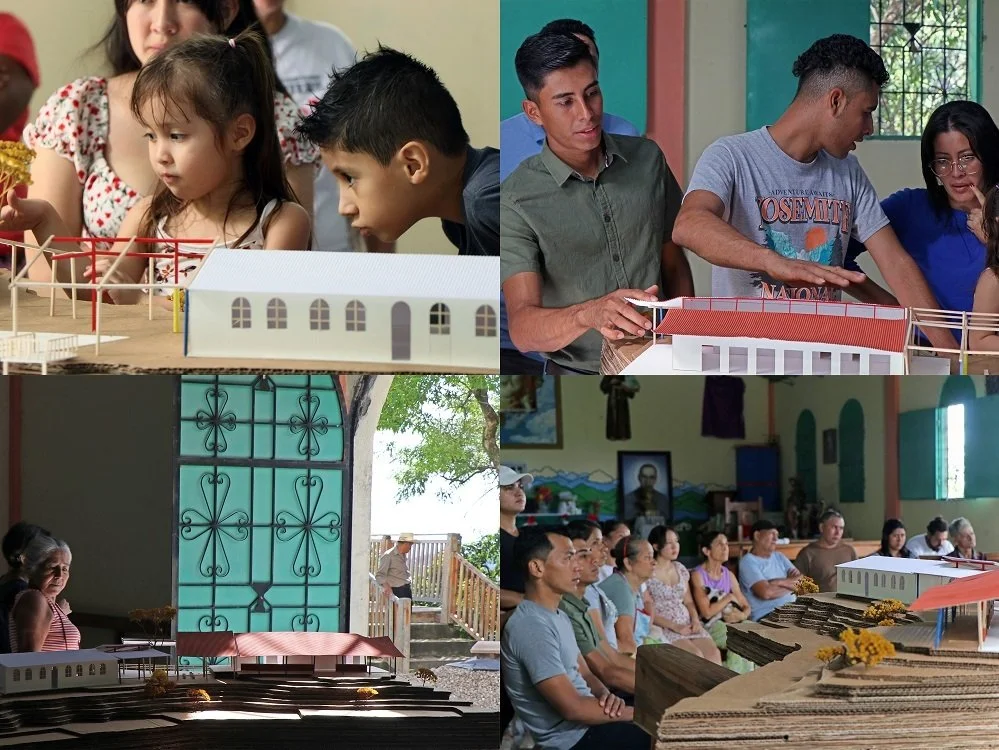
Please consider making a donation to help fund the construction a collaborative memorial to commemorate the El Higueral Massacre. KU Leuven has organized this crowdfunding initiative to support the project. As part of the Surviving Memory in Postwar El Salvador initiative, the memorial was co-designed by Harold Fallon (KU Leuven/AgwA), Evelia Macal, Thomas Montulet (AgwA), and the community of El Higueral. Even small contributions are a huge help! Donate here:
https://donate.kuleuven.cloud/crowdfunding/kuleuven/project/elhigueral?&lang=en_EN
40 Years Since the Gualsinga River Massacre
It all begins with an idea.

On August 28, people from across El Salvador gathered in solidarity with survivors to commemorate the 50 victims of the Gualsinga Massacre. A representative from the Colectivo de Memoria Histórica de Chalatenango [Chalatenango Historical Memory Collective said, “We are here, people from different communities from different parts of the country, to commemorate our fallen sisters and brothers, to accompany and offer our solidarity to the families of the victims and survivors of this massacre, to raise our voices, condemn these atrocious crimes, demand truth, justice and moral and material reparation. Today, 40 years after the Gualsinga Massacre, we are here to say: NEVER AGAIN TO WAR AND YES TO PEACE, TRUTH, JUSTICE AND RECONCILIATION!”
New Community Mural in San José Las Flores
It all begins with an idea.
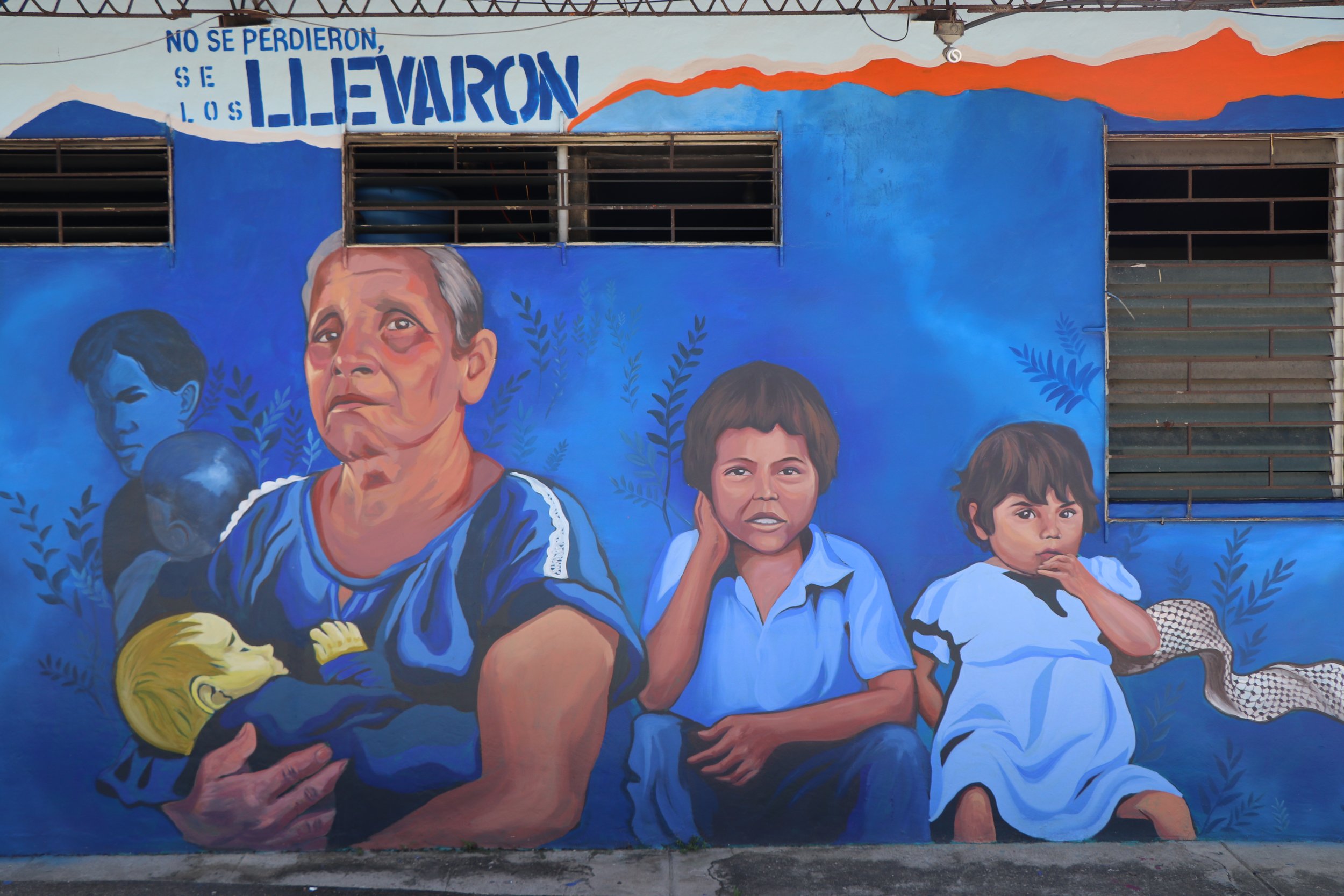
A new mural was unveiled this week in San José Las Flores to honor the boys, girls, and other missing people who were stolen and disappeared during the Salvadoran Civil War, as well as the mothers, fathers, and families who lost their loved ones. The project is a part of collaboration between Matiz Art Collective, the Historical Memory Committee of San José Las Flores, and Surviving Memory in Postwar El Salvador.


Las Vueltas Research Team: Online Collaborative Planning and Training – Winter 2023
The Las Vueltas Research Team, as part of the Surviving Memory in Postwar El Salvador initiative, brings together a diverse group of community leaders, artists, and scholars. The team includes community organizers Heidi Calderón, Nelson Rodríguez, Marvin Alas, and Juan Carlos; Salvadoran-Canadian artist Jessica Larios; Nicaraguan-Canadian research assistant Sabrina Del Bello Guatemala; and assistant professor of Anthropology Beatriz Juárez-Rodríguez (Carleton University). Together, they combine local knowledge, artistic vision, and academic expertise to document and strengthen the community’s historical memory.
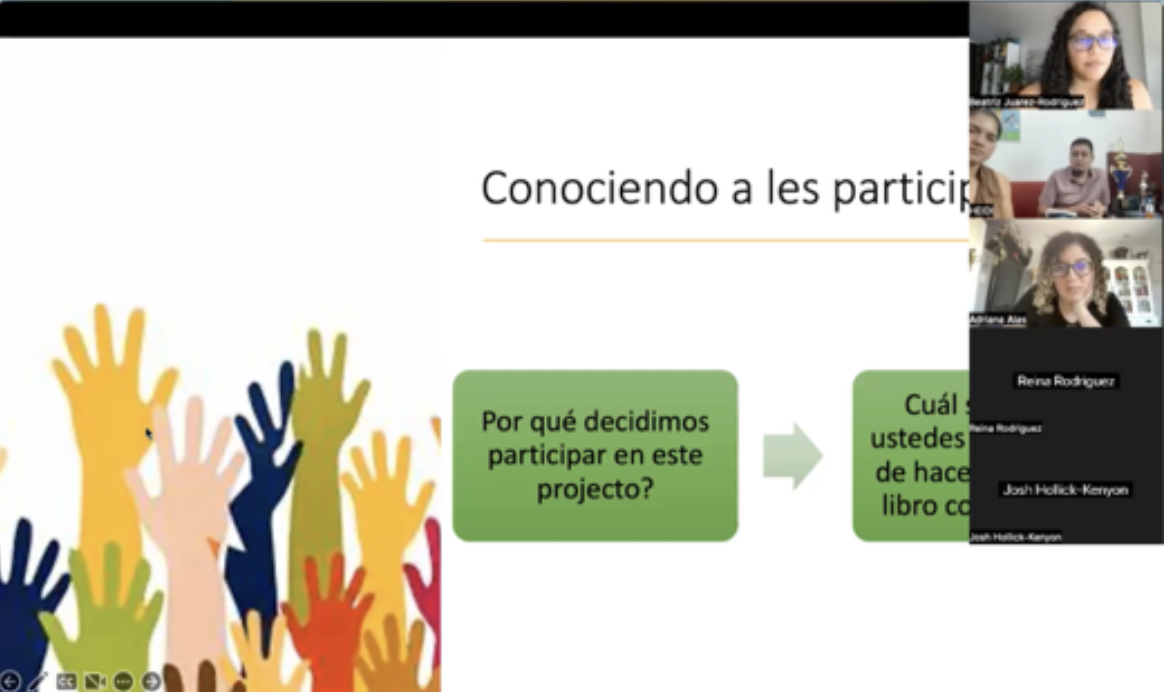
During the winter of 2023, the Las Vueltas research team met online several times throughout January, February, and March to establish the community research committee, define its goals, and co-develop the themes for the community history book. These early sessions also laid the foundation for a shared research agenda grounded in participatory methods.
On March 1, 2023, we held a capacity-building workshop titled “Reconstruyendo juntxs nuestra memoria histórica: Taller de investigación participativa.” During this workshop, participants approved the four central themes of the book, received training on interview techniques and data systematization, and collaboratively crafted the interview questions that would guide the next phase of fieldwork.
The Surviving Memory in Postwar El Salvador research initiative is supported in part by funding from the Social Sciences and Humanities Research Council of Canada, Western University, Carleton University, the Canadian Foundation for Innovation, and the Ontario Research Fund.