
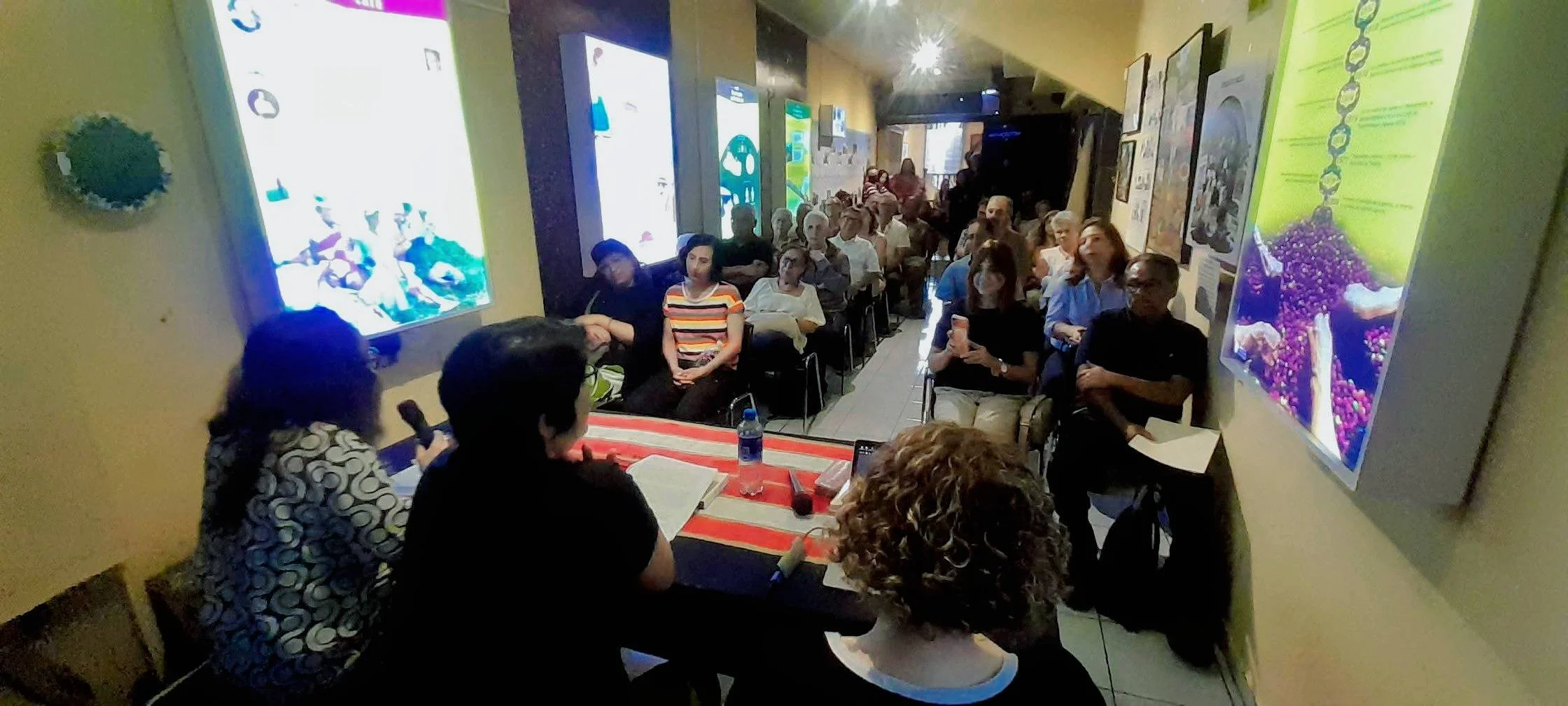
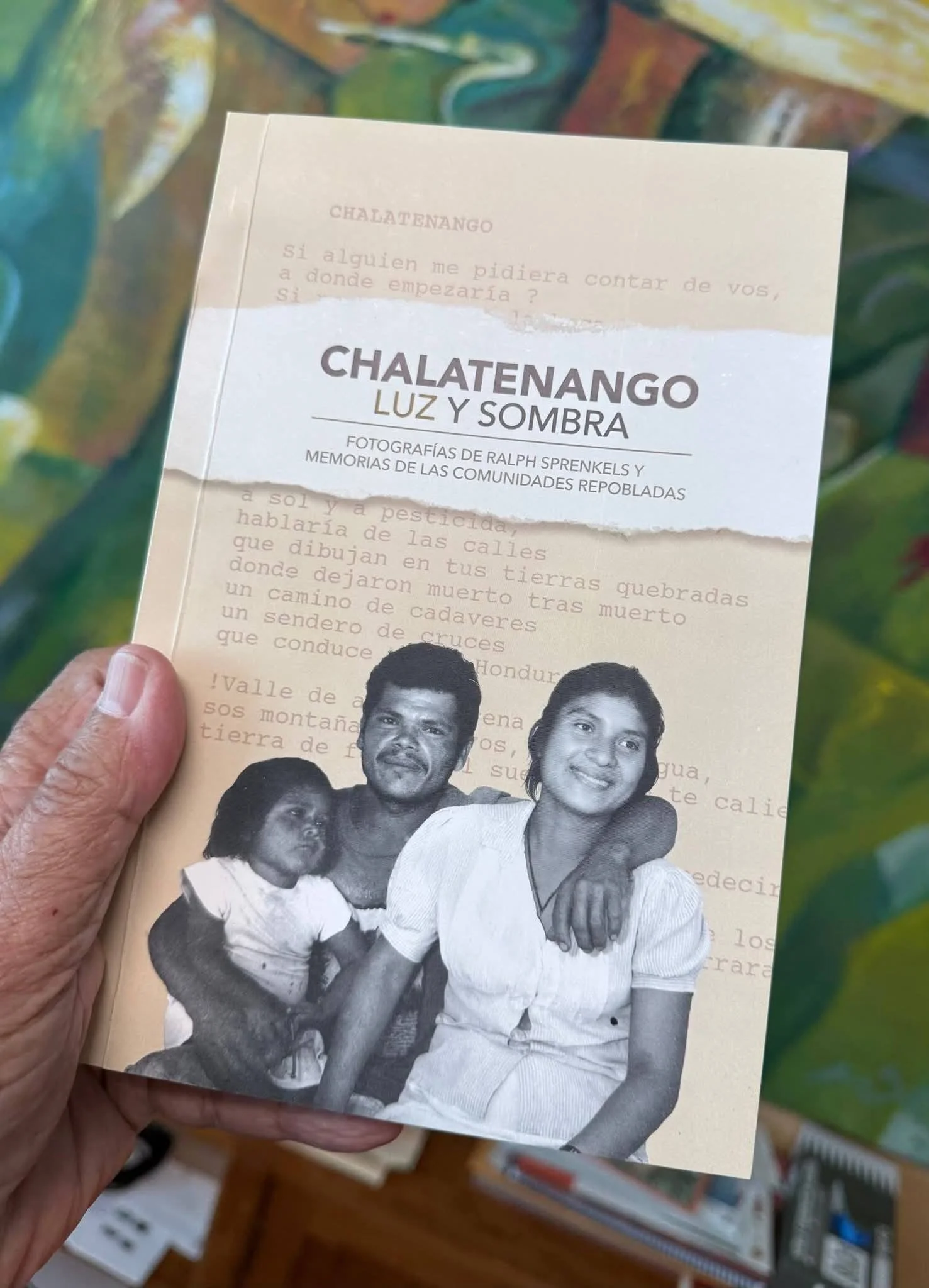
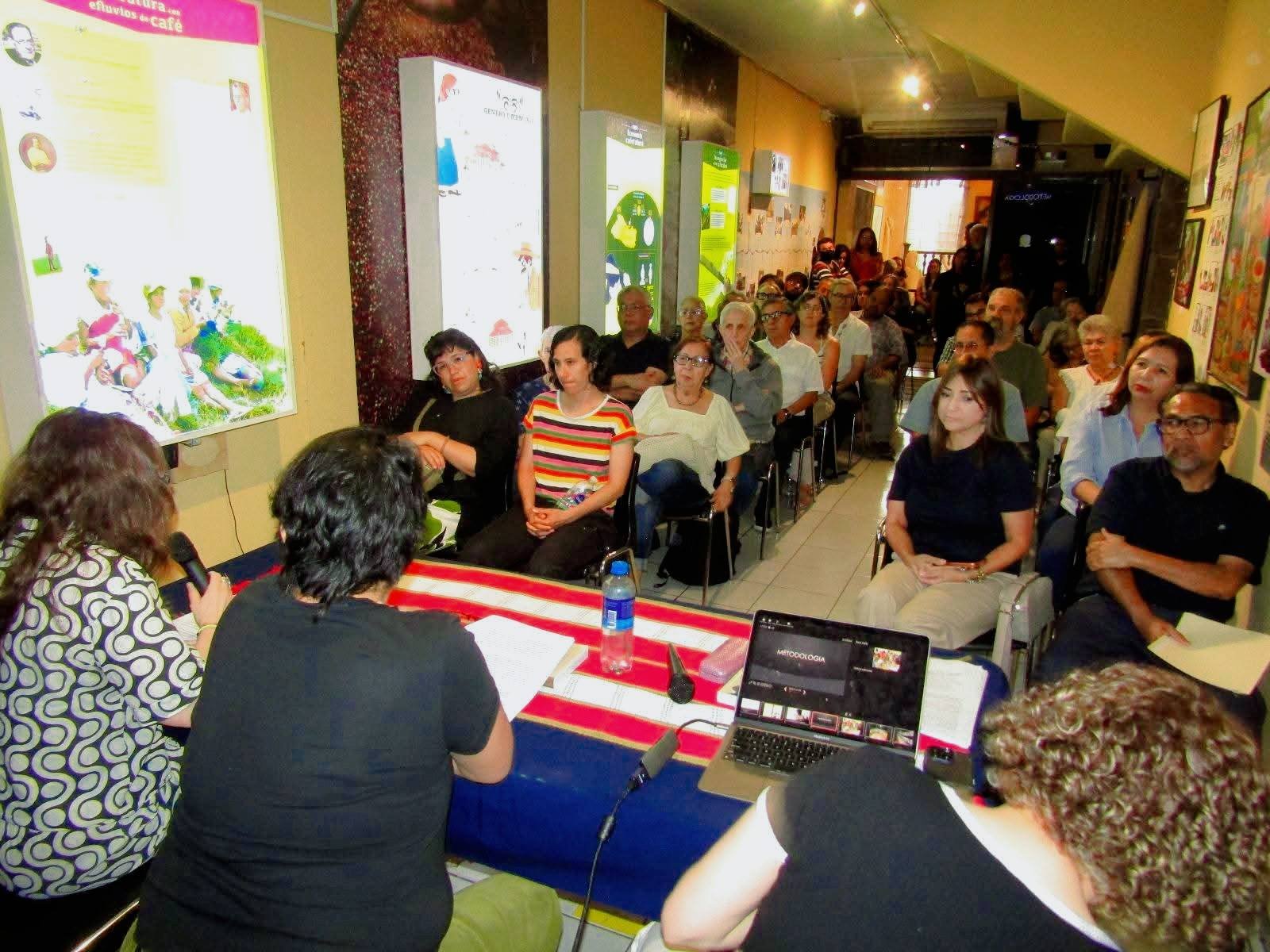
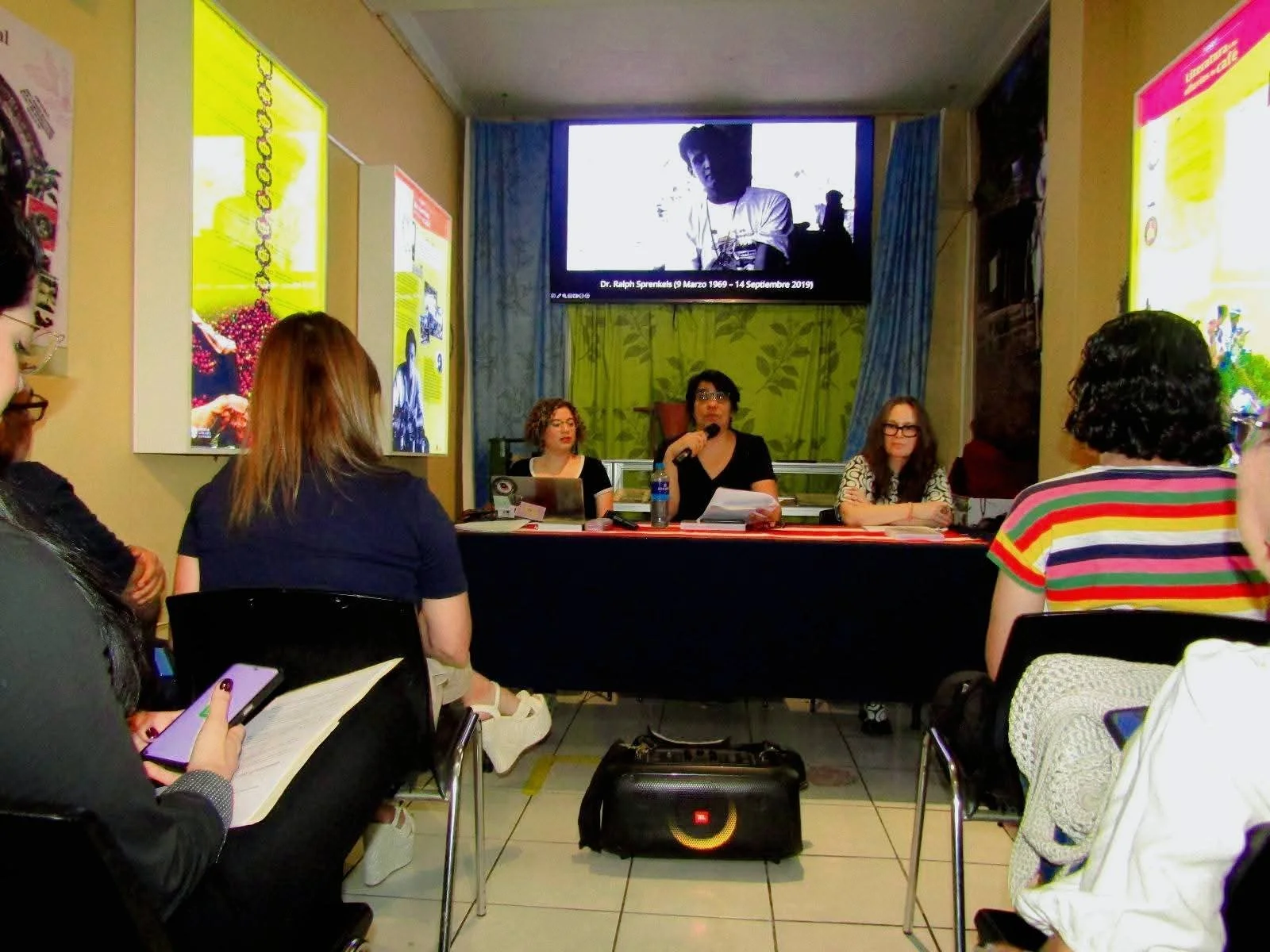
With a full house, the Museo de la Palabra y la Imagen [Museum of the Word and Image, MUPI] held the presentation of the book Chalatenango luz y sombra: fotografías de Ralph Sprenkels y memorias de las comunidades repobladas [Chalatenango Light and Shadow: Photographs by Ralph Sprenkels and Memories of the Repopulated Communities], a work that brings together Ralph Sprenkels’s powerful photographs alongside testimonies from communities repopulated during the Salvadoran postwar period.
Chalatenango luz y sombra [Chalatenango Light and Shadow] offers an approach to historical memory through the stories of women, men, young people, and children, captured through the committed and humanist gaze of Ralph Sprenkels. His images document the pain, resistance, and reconstruction of communities that, after the armed conflict, suffered the loss of their loved ones and faced the challenge of rebuilding their lives. Sprenkels not only recorded history with his camera, but also accompanied community processes, especially those of women who, in the search for their disappeared sons and daughters, faced high-risk situations.
The book, edited by Adriana Alas, Lidice Michelle Melara Minero, and Irina Carlota Silber, is a joint initiative of Western University, the Museo de la Palabra y la Imagen, and the Surviving Memory in Postwar El Salvador Project.
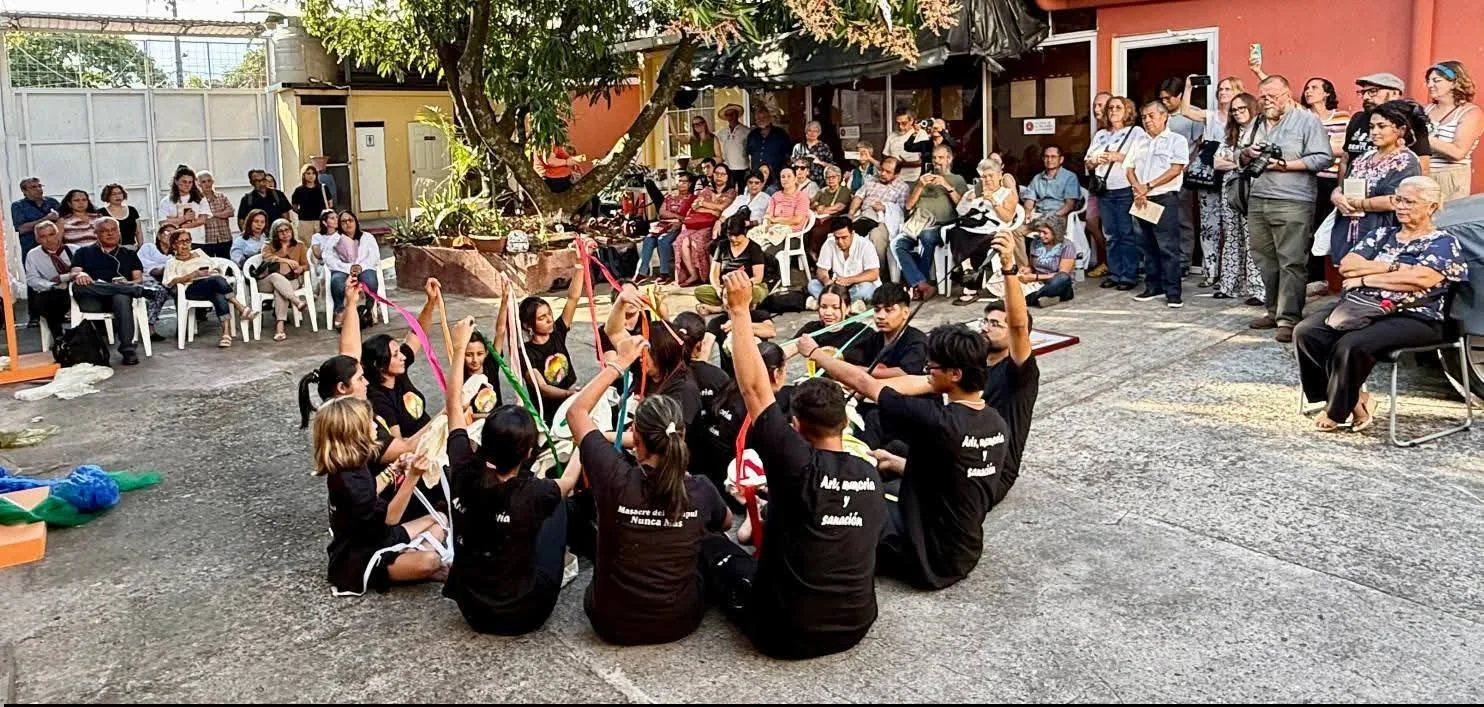
The event featured the participation of singer-songwriter Sandra Alas and the Memoria Viva [Living Memory] theater collective from Las Vueltas, who contributed an artistic moment filled with sensitivity and commitment to historical memory.
The book Chalatenango luz y sombra [Chalatenango Light and Shadow] will also be presented on Tuesday, February 17, at 3:00 p.m. at Casa Museo Jon Cortina [Jon Cortina House Museum] in Guarjila, and on February 18 at 2:00 p.m. at the Centro Arte para la Paz [Center Art for Peace] in Suchitoto.
The Surviving Memory in Postwar El Salvador research initiative is supported in part by funding from the Social Sciences and Humanities Research Council of Canada, Western University, the Canadian Foundation for Innovation, and the Ontario Research Fund.